
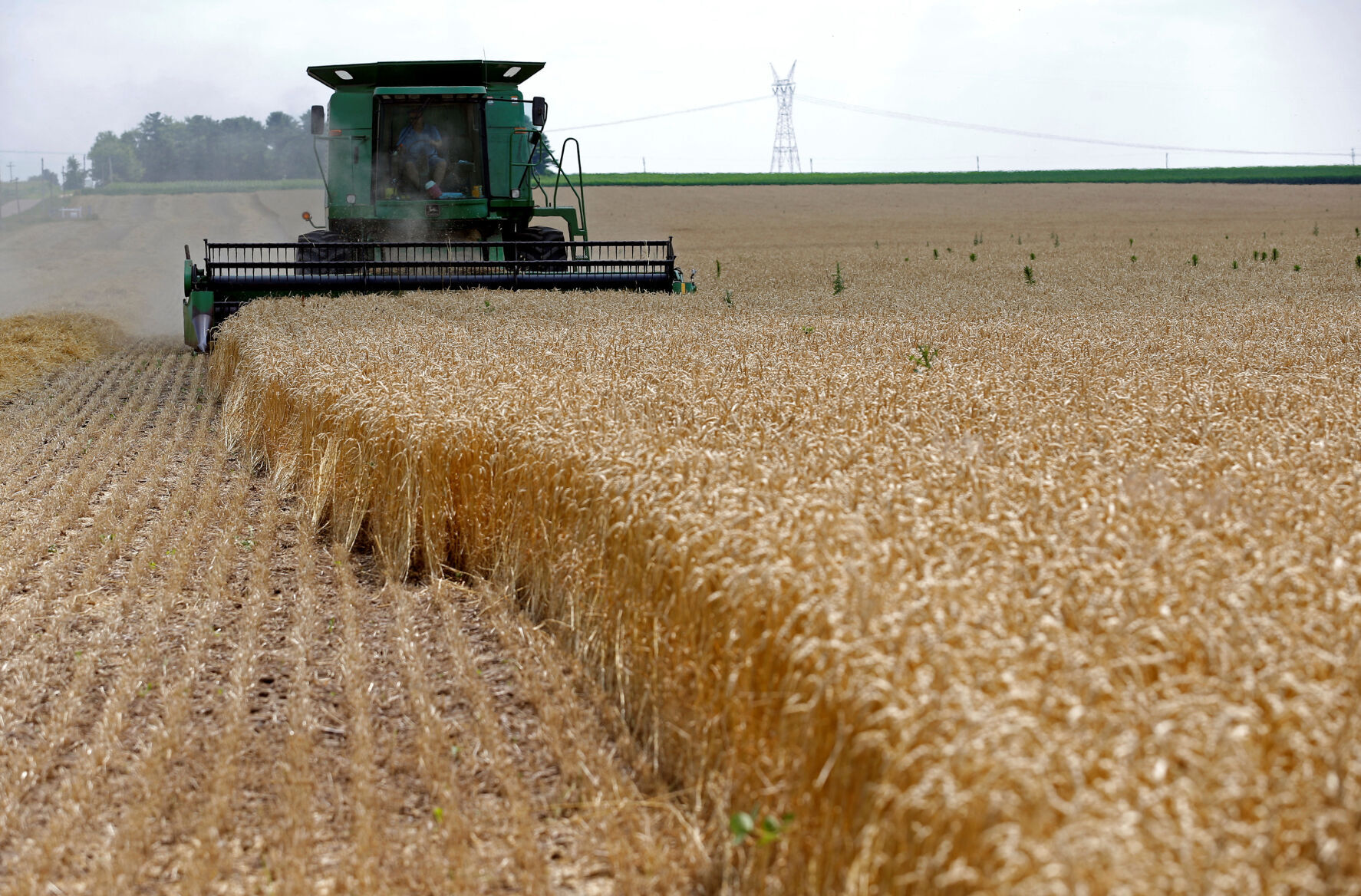
A combine drives over stalks of soft red winter wheat during the harvest on a farm in Dixon, Illinois.
A combine drives over stalks of soft red winter wheat during the harvest on a farm in Dixon, Illinois.
A combine drives over stalks of soft red winter wheat during the harvest on a farm in Dixon, Illinois.
A combine drives over stalks of soft red winter wheat during the harvest on a farm in Dixon, Illinois.
U.S. News & World Report has ranked Iowa number 12 out of all 50 states in the country.
The 2026 Overall Best State Rankings evaluated all 50 states across eight categories, including education, health care, economy, infrastructure, opportunity, fiscal stability, natural environment and crime & corrections.
Each category is weighted differently from the others, but the report doesn't just take into account how each state scores on metrics. It also included the responses of more than 56,000 people across the United States on how satisfied they were with their state's performance.
Iowa climbed two spots from 2025, when it ranked 14th. Iowa was ranked sixth in 2024.
Looks like Iowa's got some visibility.
U.S. News gave Iowa 12th place for the state's high scores across the eight categories. Its website also notes that Iowa is a "relatively small state that has played a disproportionately large role in American politics" due to the Iowa Caucuses.
Here's the breakdown of Iowa's scores:
Overall, U.S. News gave high marks to multiple states in the Midwest due to improvements in their economy, health care and natural environment scores:
The back of the pack is dragged down by "inertia," which highlights "how systemic challenges can impede progress in the categories citizens care most about," the U.S. News website states.
While almost every state excels in at least one area, Louisiana is the only state with a bottom-10 ranking in every category.
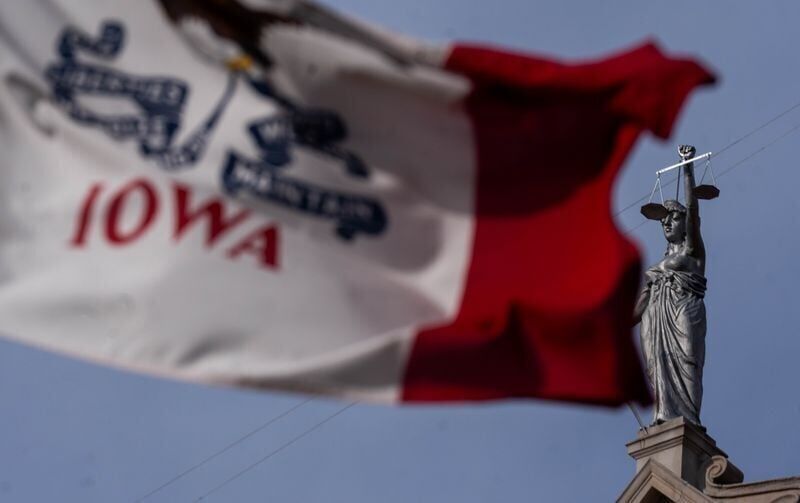
The Iowa state flag flies in front of the Dallas County Courthouse on Jan. 22, 2026, in Adel.
In determining the rankings, U.S. News analyzed 71 metrics across eight categories – education, health care, economy, infrastructure, opportunity, fiscal stability, natural environment and crime & corrections.
Some categories were weighted more than others. For example, health care and education were weighted more than crime & corrections and natural environment. Within the categories, each state was given points out of 100, with the best state given 100 points and the worst given zero.
In addition to these point-based ratings, U.S. News surveyed people across the country on how satisfied they were with their state's performance in the categories. Between 2018 and 2025, U.S. News surveyed more than 56,000 people across the United States.
Here's a closer look at how the categories were analyzed:
This report was syndicated from USA Today Network via Reuters Connect.
On his 16th birthday, Tyler Juranek, who was born visually impaired, drove his dad’s John Deere 50 tractor to McClelland for lunch at the Dew Drop Inn with his mom standing on a small wooden plank.
Fourteen years later, on Aug. 1, 2026, he drove a tractor again on his birthday — this time in a large group for his ninth annual Ride Into Sight fundraiser for retinal research at the University of Iowa clinics.
“It's Tyler's dream,” said Jackie Hursey, who has helped with the event since its inception. "He wants to find a way to either help blind people succeed in life and/or become sighted."
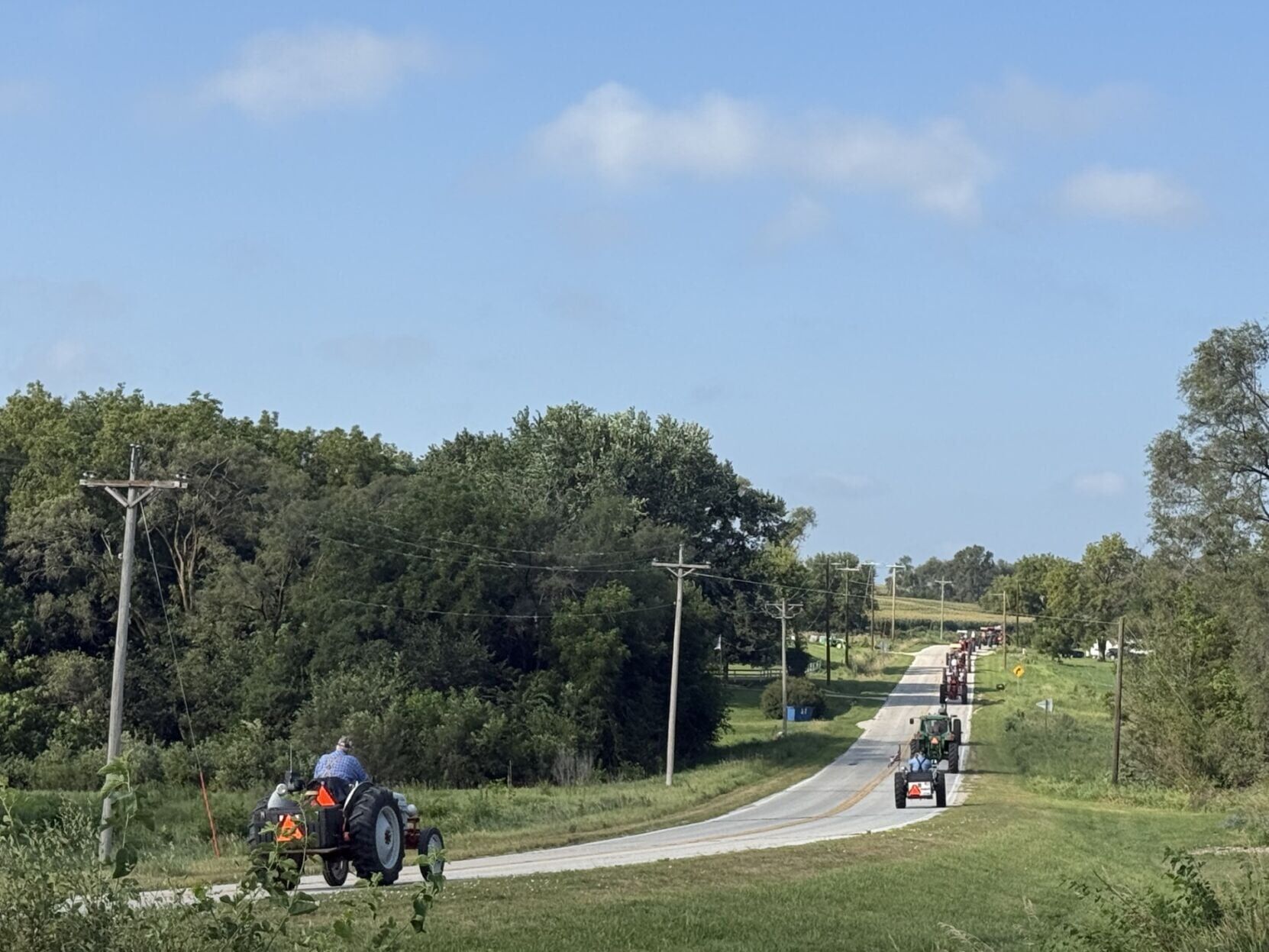
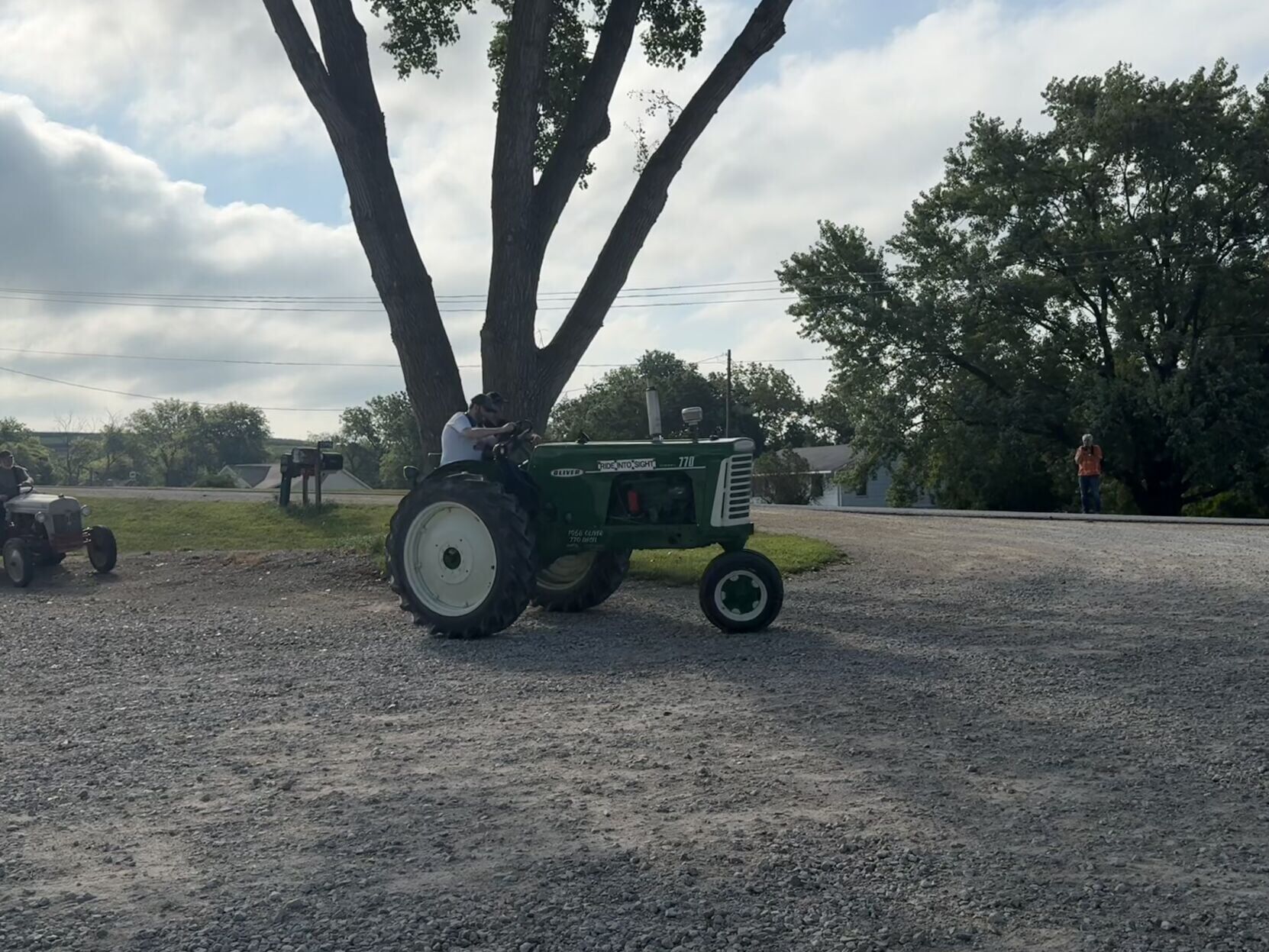
With Juranek in the lead, the Ride Into Sight tractor ride begins their 30 mile journey on Saturday, Aug. 1, 2026.
The research program “is developing a new and exciting technique that may provide the gift of sight to people in the near future” according to a news release.
Juranek has bilateral detached retinas and is completely sightless. He goes to the University of Iowa in Iowa City every year to get his eyes checked, and he always asks how the research is going.
In 2017 when he went to his annual appointment, Juranek had the idea to turn his love of antique tractors into a fundraiser for the research so close to his heart.
“I went to bed one night in a hotel room and I had this dream that I went to this tractor ride and everybody who was there put money into a bucket for eye research,” Juranek said. “I had known before that they had done rides for, you know, cancer and different rides like that. … And I woke up and, oh my gosh, I learned, shoot, this is a dream. … So I thought, ‘Well, you know what, Tyler? You should start one for eyes.’”
Determined to turn this dream into reality, Juranek put together a small committee consisting of himself, his parents, a couple other family members, Mel Hursey and his wife Jackie. They held the first Ride Into Sight event on Aug. 4, 2018.
He only expected about five other people to show up, but was pleasantly surprised at a turnout of 34 tractors. They stopped for lunch at the Dew Drop in McClelland, just like Juranek had done on his 16th birthday.
After that success, Juranek — encouraged by his mother — decided to make the fundraiser an annual event.
Ride Into Sight has now raised over $40,000 and this year it received “more (donations) than ever,” Jackie Hursey told The Nonpareil. Participants pay $30 to drive along and are provided lunch. People can choose to donate even more whether or not they attend the event.
This year's Aug. 1 ride marked Juranek’s 30th birthday, and it started and ended at Kubota of Council Bluffs and the drive was about 30 miles long.
Juranek kicked it off with a heartfelt speech thanking all of the volunteers — his committee has grown since the first ride — and sponsors, remembering “angel riders” who have passed away and explaining the rules of the ride.
Before the tractors took off, the Rev. Jacob Epstein, a priest from Juranek’s church, St. Peter’s in Council Bluffs, led a prayer and blessed the tractors. This was important to Juranek, who expressed that his faith is important to him.
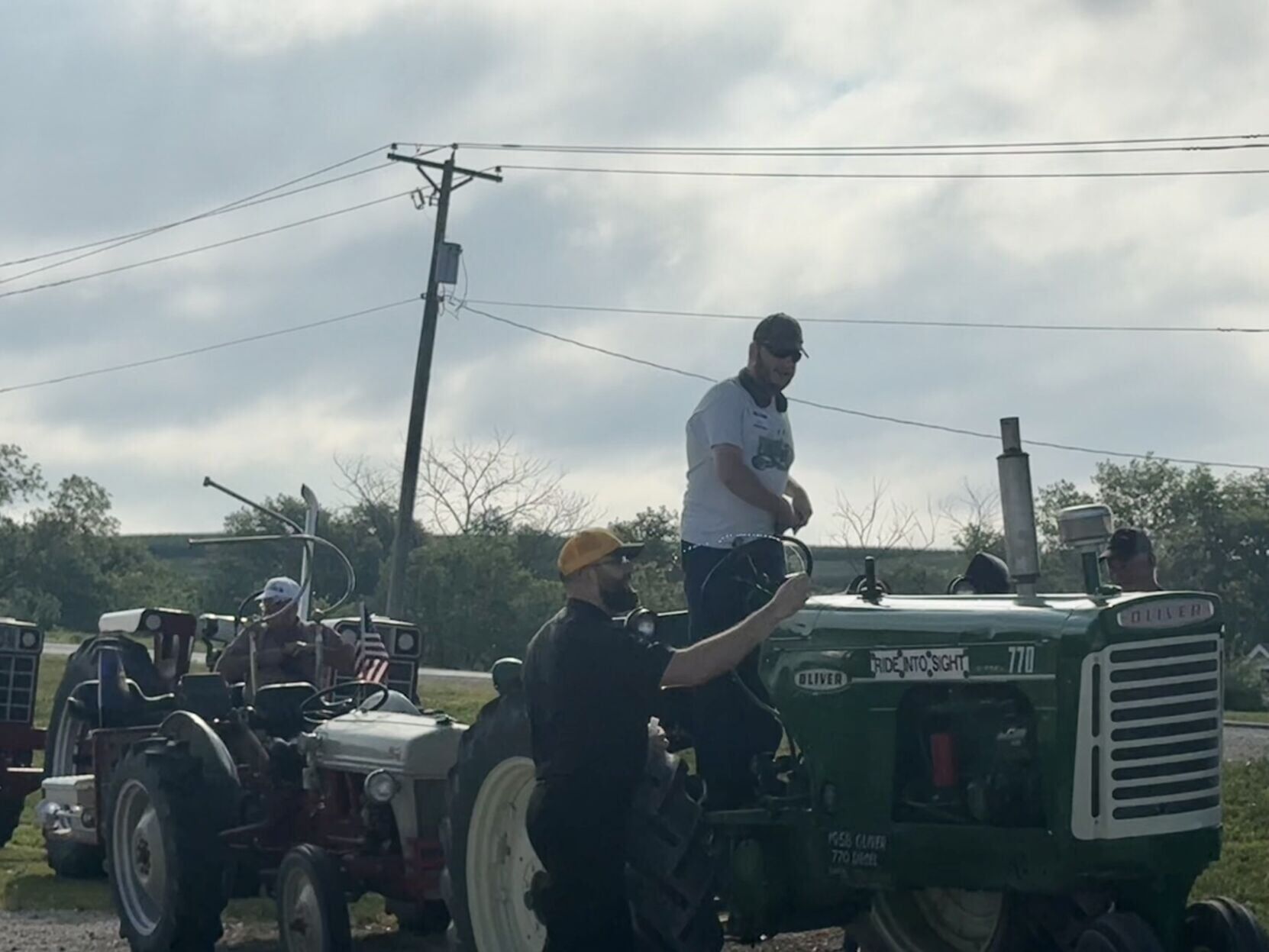
The Rev. Jacob Epstein blesses Tyler Juranek's tractor as Juranek stands on the tractor, preparing to lead the Ride Into Sight tractor ride on Saturday, Aug. 1, 2026.
A tractor ride feels like the perfect fundraiser for Juranek to spearhead because tractors have been one of his favorite hobbies for years. His father and grandfather both helped foster this love of antique tractors.
“A long time ago, when I was in eighth grade, my dad brought home a little John Deere H, and that was the first tractor that I really ever drove,” Juranek said.
His grandfather was also one of his driving instructors, teaching Juranek how to drive an Oliver 88. Juranek fell in love with the Oliver right away and was looking for one to buy when his grandpa surprised him by gifting him the very one he’d already learned to drive.
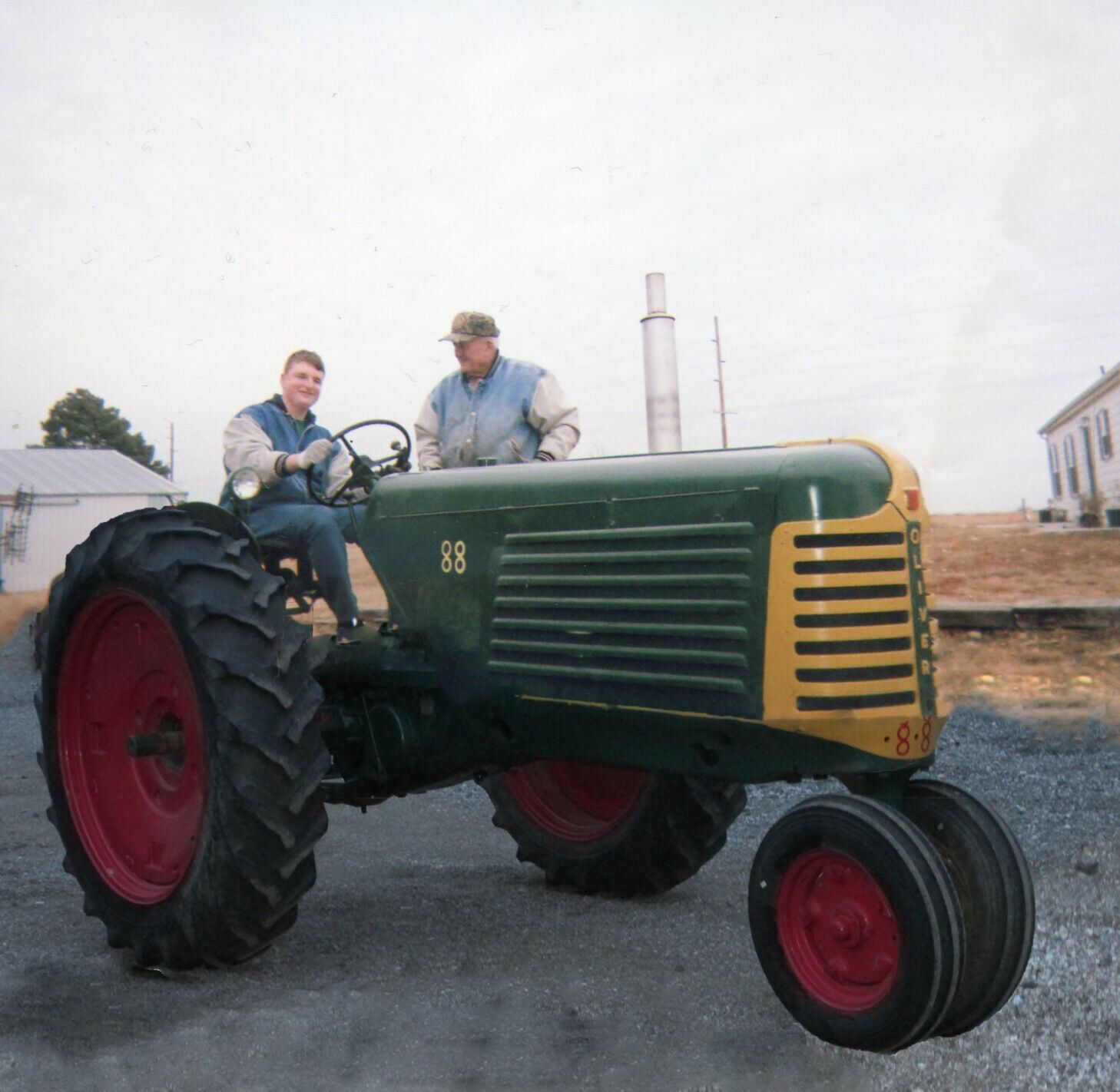
Tyler Juranek and his late grandfather, Bill Juranek, pictured in 2014 on the day Bill first showed Tyler the Oliver 88. Bill later gifted this tractor to Tyler.
“I think it's just that was a special bond that my Grandpa Juranek and I shared was the antique tractor hobby and especially Olivers,” he said. “He gave me that 88 that I drove on the inaugural run of Ride Into Sight.”
After Juranek received his Oliver, he decided it was time to find a way to put a buddy seat on the tractor to make it easier on his co-pilots. With the help of his dad, they fashioned a makeshift seat so two people could ride. However, Juranek hopes that someday this won’t be necessary.
“My goal has always been to someday drive off on the tractor alone without a co-pilot,” said the Council Bluffs native, who hopes to someday become sighted.
Though he hopes to someday see, Juranek hasn’t let his visual impairment stop him from living his life to the fullest.
“I can either get up and go to work and live a life and, you know, drive tractors and do all kinds of great things, sometimes goofy things. Or I can sit back and say, ‘Oh poor Tyler, I can't do, I can't, I can't, I can't’ and I can have a pity for party for myself,” he said.
It was Mike Hoenig, another visually impaired man, who first showed Juranek that he could be successful despite his disability. They met when Juranek was a first grader. Juranek won a Perkins braille writer, awarded in honor of Hoenig’s mother Marie. Hoenig presented the brailler to Juranek.
“Mike Hoenig was the first individual that I met as a visually impaired child who was visually impaired himself and was a visually impaired adult. I learned then that visually impaired children grow up and can do other things,” Juranek said. “You want to talk about somebody who was productive. He had a job at the University of Iowa doing something with disabilities. He went on cruises. He was a die-hard St. Louis Cardinals fan. I mean, this man did all kinds of things.”
Juranek and Hoenig stayed in touch until Hoenig recently passed away at the end of July. He was one of the angel riders honored at this year’s Ride Into Sight even though he never actually attended the ride.
Like Hoenig, Juranek has become successful. He owns his own massage therapy practice, Unleashed Relief. It’s operated solely by Juranek who decided to pursue this career because of how much massage therapy has helped his scoliosis. He’s owned Unleashed Relief for 10 years.
He also enjoys working with audio equipment and ran an internet radio program for the American Council of the Blind from 2011 to 2023.
Additionally, he spends his free time being involved with Carstens Farms and entertaining the residents of Chapters Living of Council Bluffs by playing music.
With St. Peter’s Church, he is an active member of the Knights of Columbus and a rosary ministry at Chapters Living.
But his favorite pastime remains driving tractors.
“Tractors aren't my only hobby, but man, that's one of my big favorites.,” Juranek said. "So if I get a chance to ride around on one of my antique tractors all day, I'm going to do it."
Tyler Juranek, sitting next to his co-pilot, begins the Ride Into Sight tractor ride, driving at the very front of the line on Saturday, Aug. 1, 2026.
Juranek’s loved ones are proud of his success both in life and with Ride Into Sight, and those involved with the event are looking forward to the continuation of the fundraiser.
“What Tyler himself has accomplished is what he wants everybody to have in their life,” Hursey said. “Tyler is wonderful. He dreamed up this program and it succeeded. It's given him access to do something with and for all of his friends, because the people that come here cherish Tyler as much as he cherishes them.”
Hosting this fundraiser is one way Juranek lives out one of his mantras: "A quitter never wins and a winner never quits.”

We're sharing stories that uplift, inspire and put smiles on faces — narratives that focus on extraordinary acts of kindness and grace by unsu…

Tyler Juranek kicks of the Ride Into Sight fundraiser with a speech on Aug. 1, 2026.
Look alive — even though the summer's heat and humidity are still sticking, it's never too early to look ahead to see what winter will bring.
The Farmers’ Almanac has released its 2026-2027 winter weather predictions, offering a look at what temperatures, storms and precipitation could look like across the United States. In the Midwest, it is forecasting cold, breezy weather, with some snow at times.
Midwesterners can expect frequent swings between thawing and freezing conditions, creating rapidly changing road and field conditions.
Across the entire United States, there are going to be some sharp contrasts. The forecast calls for a mix of conditions, with some areas seeing frequent storms and increased precipitation while others experience near-normal temperatures interrupted by sudden cold snaps.
In Des Moines, an average winter produces 36.5 inches of snow, according to the National Weather Service.
The Farmers’ Almanac expects an active storm pattern across the southern United States, with above-normal precipitation possible from California and the Southwest eastward through Texas, the Gulf Coast and the Southeast.
Meanwhile, parts of the northern United States could see quick-moving storms, snow squalls and periods of bitter cold.
Another storm path could bring additional precipitation opportunities along the East Coast, including rain, sleet and snow from the mid-Atlantic into New England.
Because temperatures may frequently hover near freezing, the type of precipitation could change quickly. A small shift in temperatures or storm tracks could mean the difference between rain, ice or accumulating snow.
The Farmers’ Almanac has published long-range weather predictions since 1818, using a proprietary forecasting method it says combines natural cycles, solar activity, lunar influences and historical weather patterns.
The publication says its regional forecasts are 80-85% accurate, though independent reviews have found long-range forecasts can be much less reliable than short-term weather predictions.
Meteorologists generally caution that seasonal forecasts months in advance carry significant uncertainty, especially when predicting conditions for specific locations.
El Niño is expected to remain an important influence during the winter season, according to the Farmers’ Almanac.
During El Niño winters, changes in the Pacific Ocean and atmosphere can shift storm tracks across the United States. The pattern often favors wetter conditions across parts of the southern United States and can influence where storms develop and travel.
Historically, a strong El Niño has led to above-normal winter temperatures in Iowa, according to an analysis by the National Weather Service. Wet conditions usually develop in the fall with strong El Niño conditions and carry into winter.
However, every El Niño event is different, and other weather patterns will also determine how winter unfolds.
The first official day of winter 2026 is Monday, Dec. 21, marking the winter solstice in the Northern Hemisphere.
The solstice occurs when the sun reaches its southernmost point relative to the equator, bringing the shortest day and longest night of the year for much of the Northern Hemisphere.
For meteorologists, winter begins earlier. Meteorological winter starts Dec. 1 and runs through Feb. 28, aligning with the calendar months used for seasonal weather tracking.
This report was syndicated from USA Today Network via Reuters Connect.