
Southwest Iowa Republicans prepare for new dynamic with Democratic governor

Susan Warner, left, turns in her ballot while voting at the Lewis Township 1 precinct inside First Christian Church in Council Bluffs on Tuesday, Nov. 3, 2026.

Les Jordan marks his ballot while voting just before polls close at Precinct CB 13 inside St. John's Lutheran Church in Council Bluffs on Tuesday, Nov. 3, 2026.
Republicans won all five contested legislative races covering much of Southwest Iowa Tuesday, but their victories came amid a significant shift in Iowa’s statewide political landscape that could make the next legislative session more complicated.
Democrat Rob Sand defeated Republican Zach Lahn to become Iowa’s next governor, while Democrat Josh Turek of Council Blufs defeated Republican U.S. Rep. Ashley Hinson for the state’s open U.S. Senate seat. Republicans retained control of both chambers of the Iowa Legislature.
However, Democrats flipped 11 Republican-held House seats, ending the GOP’s veto-proof supermajority in that chamber.
The results mean Republican lawmakers from Southwest Iowa will return to Des Moines with a Democratic governor for the first time in 16 years. Some expect the two sides to find areas of agreement, while others are already anticipating gridlock.
“The first term that comes to mind is gridlock,” said state Rep. Craig Williams, who won reelection in House District 11 with about 66.5% of the vote. “I'm not sure how we're going to get along together, but we shall see.”
Williams said that Sand has already signaled that he intends to challenge Republicans, but he hopes both parties can move past the contentious campaign season and identify issues they can address together.
“We need to figure out, where do we agree on things and what kind of things can we accomplish for the betterment of the people of Iowa?” Williams told The Nonpareil.
State Rep. Steven Holt, who won House District 12 with abouit 67% of the vote, offered a similar conditional outlook. He said Republicans should be able to work with Sand if the governor follows through on his campaign promise to govern as a moderate.
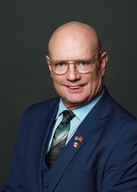
Steven Holt
“If he chooses not to do that and heads the way of Virginia and some of the other Democrat governors who campaigned like moderates and then became ultra liberal once they stepped into the office, then we're going to resist that,” Holt told The Nonpareil.
Holt said cancer research and water quality could provide early opportunities for cooperation.
Newly elected state Sen. Steve Baier said Republicans will be looking for common ground with Sand as they begin organizing for the next session.
State Rep. Jason Sherer, who won House District 15 in his first legislative election, said he is entering the process with an open mind.
“I'm new. I'm going to have to go out there and learn what the process is going to be, and try to do what's best for my constituents,” Sherer told The Nonpareil. “If something makes sense, I need to be able to do the right thing.”
Water quality, cancer remain priorities
Despite their differences in expectations for the new governor, the lawmakers identified several issues they believe will remain important in the coming session.
Water quality and Iowa’s elevated cancer rates were among the most frequently discussed concerns during the campaigns.
Williams said voters regularly raised both subjects, although he cautioned against assuming a direct connection between water quality and cancer rates.
“The science isn't really saying that they're linked at this point anyway,” Williams said. “Maybe they will be, but there's no direct link just yet, and we need to keep our eyes on that.”
He said lawmakers have already involved the University of Iowa in research into the state’s cancer rates and taken steps to improve water quality. He also said the Legislature needs to consider the economic pressures facing farmers as it pursues environmental improvements.
“We need to figure out a way for everybody to live together, keep farming, and keep our water clean,” Williams said.
Holt said he expects lawmakers to closely examine the next phase of the state's cancer study, particularly its findings related to chemicals and nitrates in drinking water.
He also wants to revisit Iowa's indoor smoking restrictions, questioning why casinos remain exempt when smoking is a leading cause of lung cancer.
Baier said he hopes the Legislature continues addressing the state’s health concerns, while Sherer identified water quality as one of the biggest issues raised by voters in his district.
Property taxes and affordability
Affordability was another consistent concern, particularly property taxes and the cost of everyday necessities.
Baier said rising fuel prices were among the most common complaints he heard while campaigning.
“The Democrats could have saved a lot of their advertising money because the primary advertising was done at the gas stations with the price of gas as people drove by every day and filled their tanks every week,” he said.
Sherer said property taxes were probably the most frequent issue voters brought to him. He supports the 2% cap on certain property tax revenue growth approved by lawmakers last session and wants to see how it affects local governments before pursuing additional changes.
Williams also expressed uncertainty about whether lawmakers will pursue further property tax legislation.
“I’m not sure we’re going to see any more changes in the property tax issue,” Williams said. “The only thing that's left is the school taxes, and I'm not sure we're going to be able to find common ground.”
Holt said the state should continue looking for ways to make life more affordable, although he acknowledged that many economic pressures are outside the Legislature’s direct control.
Sherer said he plans to focus on controlling state spending rather than entering his first session with a list of specific bills.
“I don't really have any specific legislation that I want to go on at this point,” he said. “Just protecting our constituents' pocketbooks as much as we can.”
Rural communities and economic development
Baier, who previously served on the Griswold school board and the Cass County Board of Supervisors, said rural population decline is among the biggest long-term challenges facing southwest Iowa.
“The biggest challenge is going to be the hollowing out of rural America,” he said.
He said lawmakers should look for ways to encourage young people to return to rural communities and ensure farmland passes to people who intend to live and work on it.
Holt identified economic development and infrastructure as important concerns for the Council Bluffs area. He continues to advocate for expanding Highway 34 to four lanes, saying inadequate transportation infrastructure can discourage businesses from locating in the region.
He also discussed a proposed steel plant as a potential economic opportunity and said lawmakers will need to consider how counties regulate data centers.
Baier hopes to revive legislation allowing community colleges in parts of southwest Iowa without four-year institutions to offer certain bachelor’s degrees. He mentioned Iowa Western Community College, saying expanded degree options could help working adults advance their careers without relocating or a four-year degree.
Sherer said he hopes his first term produces tangible financial relief.
“Hopefully everyone's pocketbook is a little better,” he said.