
As cancer rates continue to climb in Iowa, study finds fewer cases among farmers
Despite speculation about a possible connection between Iowa farmers’ exposure to chemicals and the state’s steep cancer rate, a decades-long Agricultural Health Study has found Iowa farmers and their spouses actually had fewer cancers overall than the state’s general population, according to findings reported in this year’s Cancer in Iowa report.
The study — which enrolled 89,000-plus farmers and their spouses in Iowa and North Carolina in the mid-1990s — found Iowa farmers had 13% fewer cancers than the general Iowa population between 1994 and 2015. In terms of specific cancer types, farmers reported fewer cases of colon and rectum, lung, bladder, oral cavity and pharynx, pancreas, esophagus, larynx, liver and tongue cancer.
Their spouses similarly had 10% fewer cancers than the general Iowa population — including lower rates of cancer of the colon and rectum, lung, bladder, pancreas, and cervix.
Both Iowa farmers and their spouses did, however, experience higher numbers in two types: the farmers reported 20% more prostate cancer cases and 65% more lip cancer cases; their spouses reported 34% more cases of melanoma and 27% more cases of thyroid cancer.
“I think it just really showcases how complicated cancer is,” Mary Charlton, University of Iowa epidemiology professor and director and principal investigator of the Iowa Cancer Registry, told The Gazette, expressing some surprise at the findings that “the people with the highest exposure to pesticides would also have a lower burden of cancer.”
A healthier farming lifestyle, however, could be related.
“There’s something called the healthy-worker effect,” Charlton said. “To be working as a farmer, you have to be in good enough health to do the physical activity that’s required of farming. So they’re going to be a little bit healthier and more active group. It just goes to show that those lifestyle factors are really still very, very important in terms of contributing to our cancer rate.”
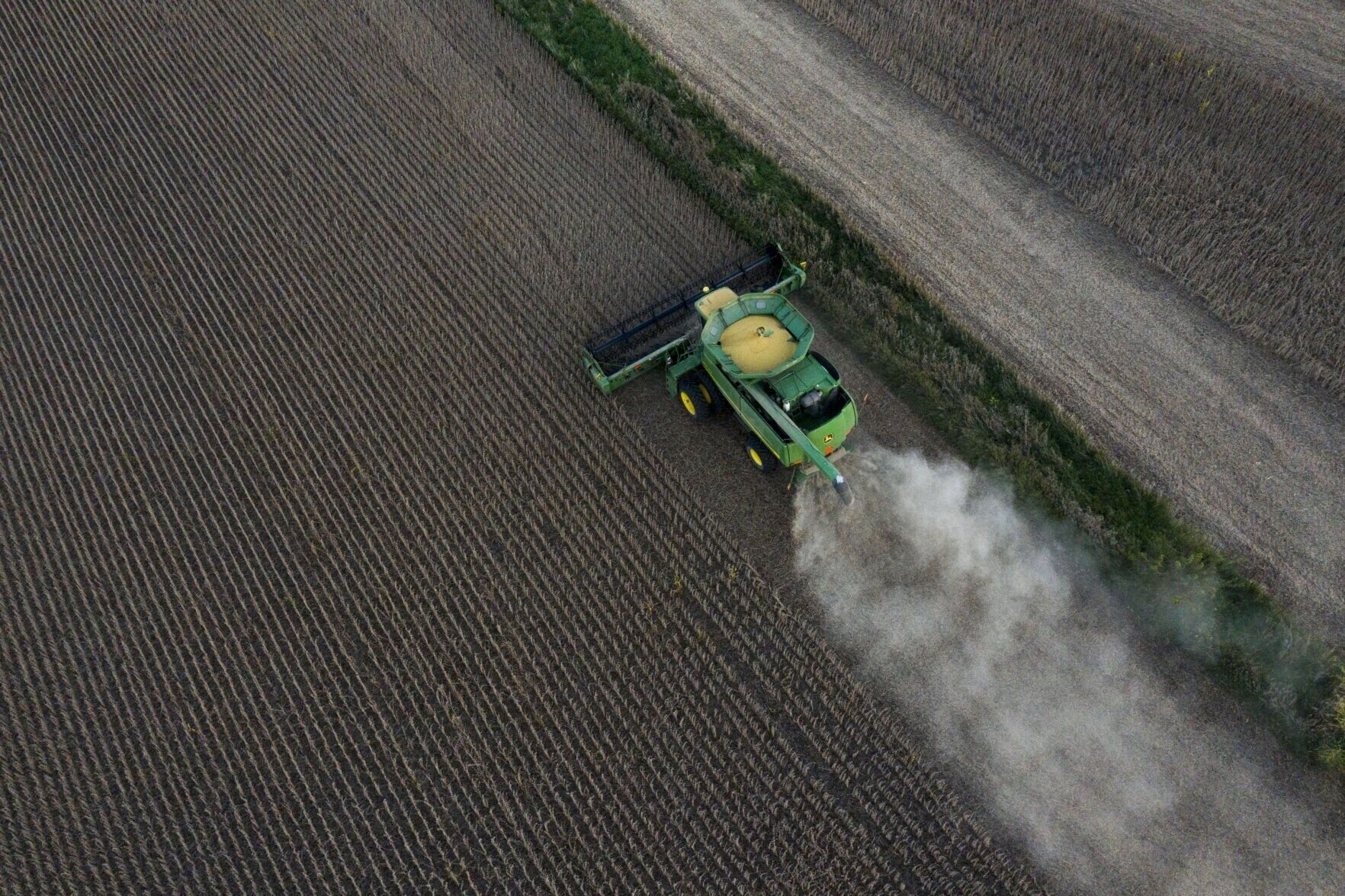
A farmer harvests soybeans Sept. 27, 2021, on land in rural Garrison, northwest of Cedar Rapids.
Iowa has fastest-rising rate
Despite the farmer-specific findings, the 2026 Cancer in Iowa report — produced by the statewide Iowa Cancer Registry and released Friday — showed cancer rates continue to climb in Iowa, which has the fastest-rising cancer rate in the nation and the second-highest incidence behind only Kentucky.
One of the few states where cancer rates are still rising, Iowa expects 21,700 new invasive cancers will be diagnosed in 2026, and 6,400 more Iowans will die from the disease. That’s up from 21,200 new cancers and 6,300 deaths in 2025; and it’s up 31% from a decade ago in 2016, when the report predicted 16,600 new cancers.
At that time, however, the registry also reported 6,400 anticipated deaths — indicating medical advancements have improved treatment options and survival rates.
“We do have a high incidence rate, but we have a pretty average and declining mortality rate,” Charlton said. “So we’re just sort of accruing survivors at a pretty fast clip.”
Iowa Cancer Registry incidence and survival data for 1973-2021 indicates an estimated 175,290 cancer survivors are living in Iowa, according to the 2026 report, up 19% from the 147,700 survivors estimated in 2019, the first year the registry began reporting that number.
“Fortunately, in Iowa, a lot of our more common cancers are ones that you can detect early and treat and live a long life after finishing treatment,” Charlton said. “A lot of what’s driving our increases are cancers like breast cancer, prostate cancer, melanoma — they’re really early-stage cancers that are able to be treated, and then you have a really good survival rate.”
The top new cancer cases expected this year are prostate and breast cancer, each accounting for 14% of the total new cancers. Lung cancer is expected to cause the most deaths, according to the report, at 23%.
“Lung cancer has been really stubborn for us,” she said.
And the report this year highlighted the total cancers that Iowa’s 175,290 living survivors have had: 191,560. That higher figure means some survivors have had more than one diagnosis.
“Especially people who have had radiation in the past, that can really expose them to different types of cancer,” Charlton said. “There’s also people who if they have some kind of genetic predisposition to one type of cancer, they often have it to multiple types of cancer. And then some risk factors like smoking are related to multiple types of cancers.
“So it kind of depends on what they’ve been exposed to before. But unfortunately it’s a fairly common scenario for people to have multiple cancers.”
This year’s report included data on child, adolescent and young adult cancers — showing Iowa with incidence rates on par with the rest of the country through the teenage years but outpacing the national average in cancer affecting 20 to 39-year-olds.
“The incidence rate for young adult cancer in Iowa was higher than the U.S. rate for both 2008-2012 and 2018-2022, and it increased significantly from 2008-2012 to 2018-2022,” according to the report. “Iowa’s rate for young adult cancer ranks the second highest in the U.S.”
But investigation into why is as complicated as the question into Iowa’s overall steep rate — and Charlton said state investigators need more data, not just related to farmers who are directly exposed to chemicals but those living nearby.
“A lot of people who maybe live near farms are still very concerned about what they’re exposed to,” she said. “This report doesn’t really address that.”
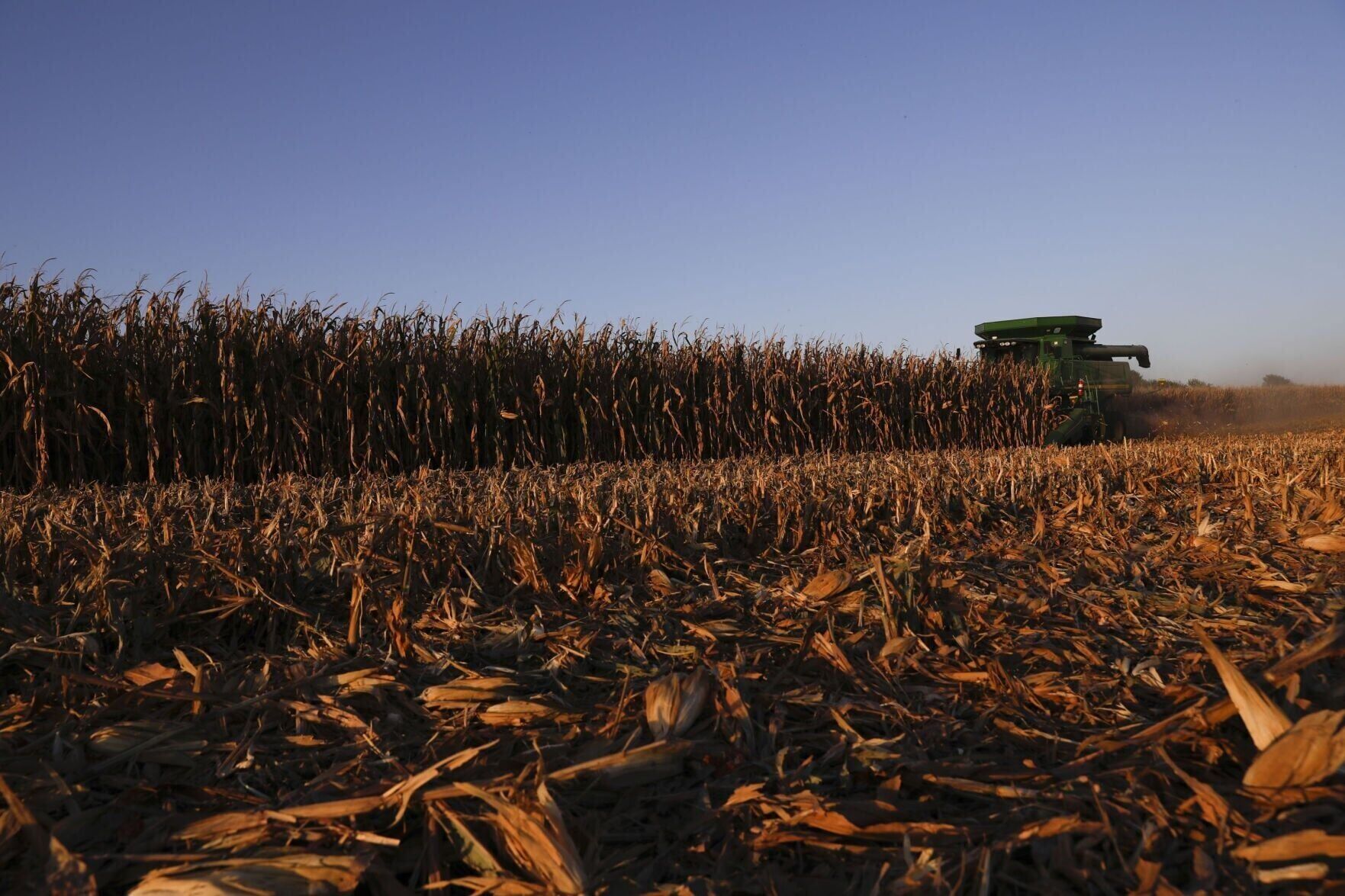
A farmer harvests corn in September 2021 in rural Garrison.
Farmer lifestyle examined
Of the more than 89,000 Iowa and North Carolina farmers and spouses who enrolled in the Agricultural Health Study in the mid-1990s, nearly 36,000 were mostly male farmers who apply pesticide in Iowa and nearly 21,000 were mostly female spouses.
“Because over 80% of Iowa’s pesticide applicators chose to enroll in the study, the study population closely reflects the broader population of pesticide applicators in the state of Iowa during that time,” according to the report.
When researchers registered participants, they asked them a series of lifestyle questions — in addition to details of their pesticide exposure.
“Lower rates of smoking and alcohol consumption among AHS farmers and their spouses likely contributed to a lower burden of many cancers,” according to the report.
Specifically, participating farmers and spouses were less likely to smoke than the general Iowa population: 11% of farmers reported smoking compared with 25% of Iowa males; 8% of spouses smoked, compared with 22% of Iowa women.
Farmers and spouses also were less likely to drink alcohol at least once a month: 61% of farmers drank once a month, compared with 68% of men in Iowa; 36% of spouses drank, compared with 48% of Iowa women.
At the time of enrollment — between 1993 and 1997 — more farmers and spouses were either overweight or obese than the general population, with 75% of farmers, compared with 65% of Iowa men.
“Of note, Iowa’s current obesity rate has almost doubled to 40% compared to what it was in 1995 (about 20%),” according to the report.
And more farmers used smokeless tobacco — like chewing tobacco — at 14%, compared with 8% for the general Iowa male population.
“Farmers were diagnosed with 65% more cases of lip cancer than expected,” according to the report, noting 47 lip cancer cases diagnosed among farmers over 22 years — or about two cases a year. “Most of the excess were cancers of the external lip, suggesting that sun exposure (UV radiation) plays a major role. Farmers also reported higher rates of smokeless tobacco use, which may contribute.”
Among the only large, long-term studies in the world designed to better understand how agriculture, lifestyle and genetics influence the health of farming families — the Agricultural Health Study has “greatly expanded our understanding of cancer risks linked to certain pesticides.”
“I feel like it’s safe to say it’s not just that,” Charlton said. “If the pesticides were causing all the cancer in Iowa, then surely the people who are the most exposed to it would have higher rates."
“So I don’t know that it ruled it out. I think it’s still a really important area of study," Charlton continued. "To me, it just really provides helpful context to say — it isn’t one thing here that’s causing all the cancer. It’s multiple things that are all contributing to this.”
Vanessa Miller can be reached at vanessa.miller@thegazette.com