Changes to restrictions on the Supplemental Nutrition Assistance Program have left Iowans confused.
Iowa was one of five states that had pilot programs for restrictions on SNAP purchases approved by the U.S. Department of Agriculture, part of the Trump administration's "Make America Healthy Again" initiative.
Iowa's program was supposed to last two years and was one of the most restrictive, prohibiting SNAP recipients from using benefits to purchase taxable food items under Iowa law, including soda, candy, sweetened beverages, certain prepared foods, certain granola bars, caramel corn and other candy-coated snacks.
However, the program ended in late June when Judge Amy Berman Jackson of the U.S. District Court for the District of Columbia ruled the USDA exceeded its authority in approving the restrictions. The ruling blocked the restrictions from taking place or continuing.
Jackson concluded that U.S. Agriculture Secretary Brooke Rollins improperly relied on a section of federal law allowing pilot projects aimed at improving the administration of SNAP rather than a separate provision specifically governing nutrition and health demonstration projects.
Jenny Colvin, vice president of philanthropy for River Bend Food Bank in Davenport, said the back-and-forth on restrictions increases chaos and confusion among people using SNAP benefits.
“When you put in something like what happened with these SNAP restrictions, and then the reversal, it just creates confusion to an already very stressful and confusing time for people experiencing hunger,” Colvin said. “It’s created a lot of deterrents, discouragement, and just chaos.”
River Bend works with more than 400 partner organizations across 23 counties in eastern Iowa and northwestern Illinois.
According to state data, there were 247,907 SNAP recipients across Iowa in May. This is a decrease from July 2025, when there were 271,755 recipients. The drop in enrollment coincided with the One Big Beautiful Bill Act that went into effect in July 2025.
The bill reduced federal SNAP spending by about $187 billion over 10 years.
As of May, Pottawattamie County had 9,742 SNAP recipients across 5,188 households receiving a total of $1,678,143 in benefits. Nearly 49% of the county's residents who qualify participated. A little over one-tenth of Pottawattamie County's population receives SNAP.
In Crawford County, 1,036 participants received $160,007.
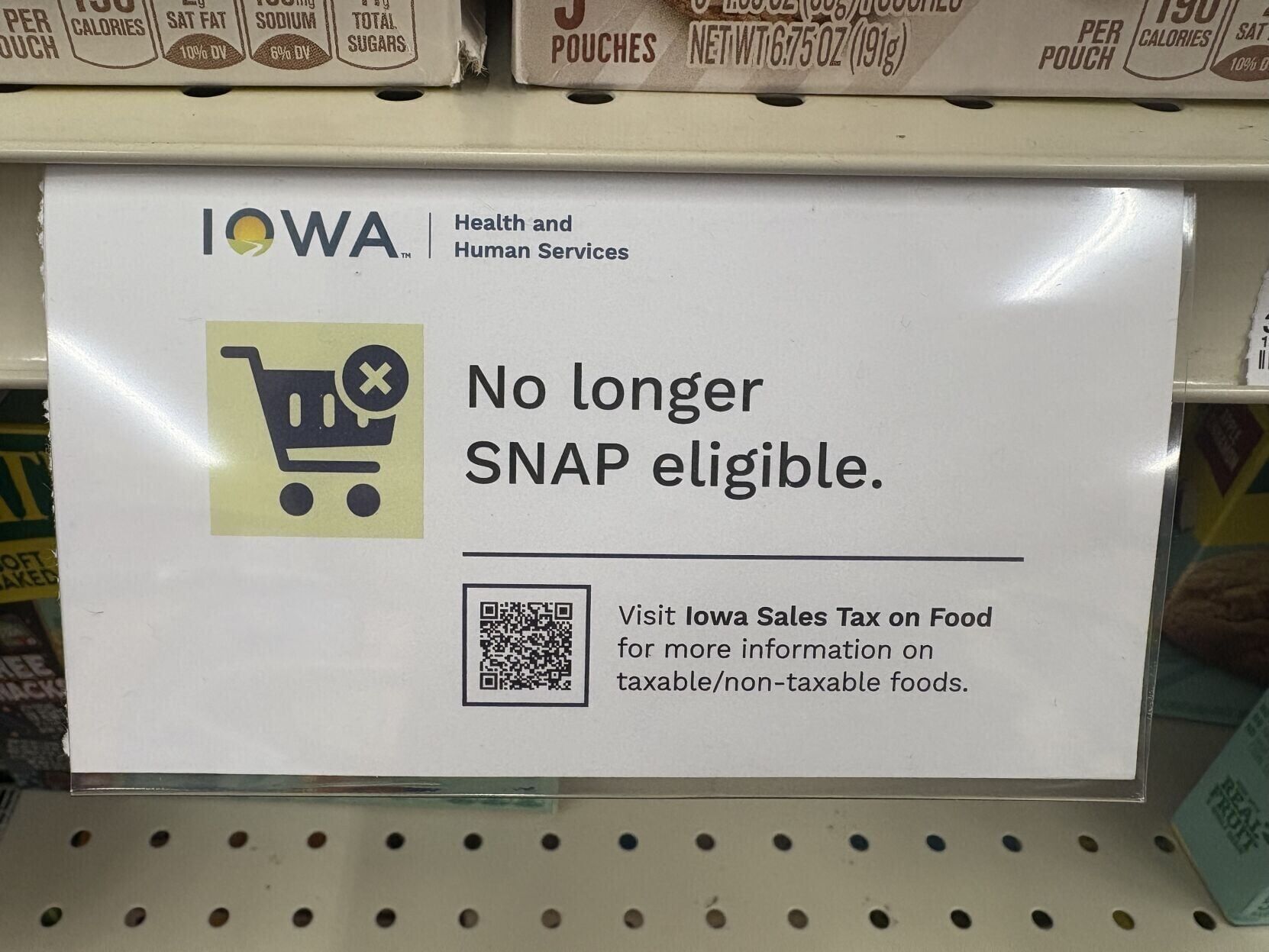
![]()
A shelf tag reading "No longer SNAP eligible" hangs
beneath a box of breakfast bars at a Des Moines grocery store,
informing shoppers that the product cannot be purchased using
Supplemental Nutrition Assistance Program benefits under Iowa's
now-blocked Healthy SNAP pilot program‚ which has now been
halted.
Tom Barton, Cedar Rapids Gazette
Colvin said there is a trickle-down effect when SNAP benefits become harder to use, not only affecting families but also food pantries.
“SNAP is the most effective tool to prevent hunger. So, when SNAP becomes harder to use, more stigmatizing, more confusing, it’s the families who feel it first and then it's the food pantries that feel it next,” Colvin said.
Colvin said that if the goal is to promote healthier food, the solution is not to restrict but rather to increase access.
“The way that we get there is not by restricting; it's by making healthy food more affordable and accessible. Not by creating more stigma for people who are already struggling,” Colvin said.
Iowa Gov. Kim Reynolds reinforced her disappointment with the decision to end the restrictions on July 8. Reynolds said SNAP recipients will still receive their benefits as planned.
Reynolds said that she hopes the federal government decides to appeal the ruling, and if it does, the state would look to play a role in that appeal.
“I think it’s so important. This is about the health of our kids, and our data is horrible,” Reynolds said. “It’s not a mandate that they can’t have those items. It just says if taxpayer dollars are going to be used through this program that was designated to provide nutritional food to our kids, then that’s the intent of the program and we should adhere to that.”
Colvin says that River Bend uses a ranking system of green, yellow and red in an effort to provide nutritional items. She reiterated that there are ways to increase nutritional options without restricting.
“I'll say again, families experiencing hunger do not need judgment. They need enough resources and real choices,” Colvin said. “So, helping them by providing more nutritious items versus focusing on taking it away.”