Representatives from Iowa’s community colleges and their business partners gathered in the Iowa Capitol Tuesday to showcase their unique programs and partnerships to lawmakers, with some hoping to convince the Legislature to not eliminate a state program responsible for collaboration between business and education.
The state’s Industrial New Jobs Training (260E) Program was a focus of the Iowa Community Colleges Day on the Hill event. The Iowa DOGE task force report and proposed legislation seeks to end the initiative that advocates say is vital in training Iowa workers.
Administered by community colleges and financed through bonds they sell, the 260E program helps Iowa businesses — or those looking to relocate to the state — train new employees, with partnering businesses diverting 1.5% to 3% of state withholding taxes generated by the new jobs back to the colleges to retire the bonds.
“It’s been very successful for over 40 years, but things can always be updated, and we’re very open to that conversation,” Community Colleges for Iowa Executive Director Emily Shields said. “We just would hate to see it end so suddenly.”
One of the sections included in House Study Bill 755, slated for a House Ways and Means subcommittee meeting at 8:15 a.m. March 4, would eliminate the ability of community colleges to use withholding taxes to pay for the program, said Kim Didier, executive director of Des Moines Area Community College Business Resources.
The 260E program is an important facet of DMACC’s work creating strategic partnerships with businesses, Didier said, and alternatives haven’t been presented to the businesses that would be negatively impacted by its closure. The Iowa DOGE report recommended replacing this and other identified workforce programs with a $30 million “employer-directed workforce training fund within Iowa Workforce Development.”
“It’s not about us, it’s about our businesses, and about having a full continuum of economic development tools available across the state,” Didier said.
Community colleges work very hard to provide consistency across the state while addressing regional needs, Didier said, and businesses contracted with the institutions stopped by the Capitol to speak on the benefits to their employees and growth.
![]()
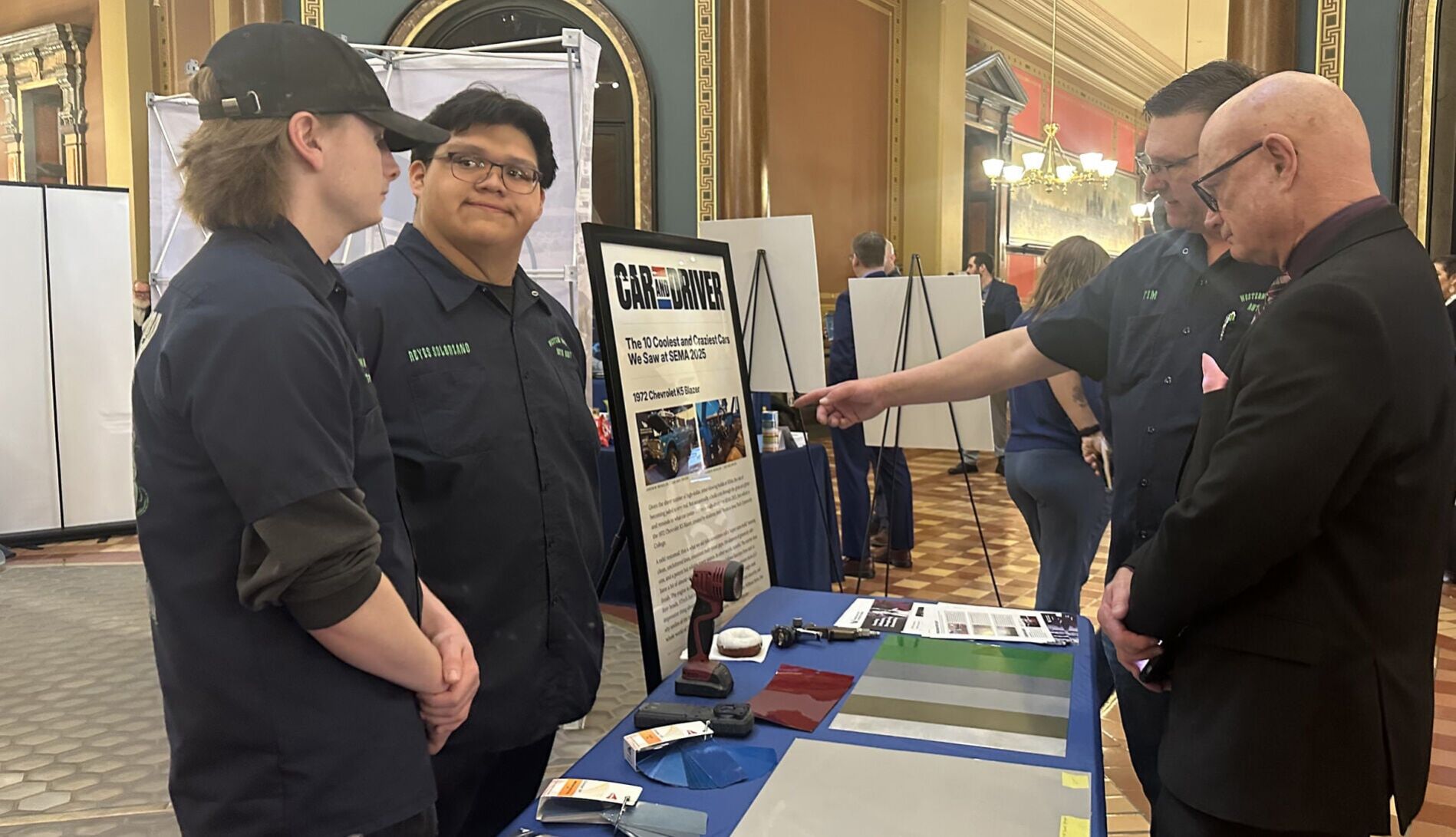
State Rep. Steven Holt, right, speaks
with Western Iowa Tech Community College students and faculty on
Tuesday, March 3, 2026 at the Iowa Capitol
Brooklyn Draisey, Iowa Capital Dispatch
Grace Swanson, vice president of human resources at global micromolding company Accumold, said the company established a scholarship program at DMACC in 2006 that has awarded 120 scholarships in the college’s tool and die-making and robotics programs. Over the past 20 years, Swanson said the company, based in Ankeny, has retained scholars from the program in all but three of those years.
Finding machinists or robotic technicians in Iowa is difficult, Swanson said, as is recruiting people from outside the state. Having this scholarship program has allowed the company to train people and keep them in Iowa, who in turn provide economic benefits to the state.
“Guaranteed, without that program, Accumold would not be as successful a business as it is, creating products around the world in medical and microelectronics,” Swanson said.
Colleges seek increase, changes to scholarship program
Other priorities for Iowa’s community colleges, shared with the House Education Appropriations subcommittee Monday, include securing $12 million in incremental funding and codifying changes to the Last-Dollar Scholarship program to extend the timeline for determining eligible programs and give control of the income cap on students who qualify to Iowa College Aid.
One-quarter of the increased funding would be used for continued efforts to make the per-pupil funding for community colleges more equitable, Shields told the subcommittee, by providing more money to colleges that previously were receiving less funding through the state’s general aid formula.
Rep. Steven Holt, R-Denison, spoke with students studying auto body collision repair at Western Iowa Tech Community College during the day on the hill, hearing about their hands-on work and the opportunities the program has provided for them as well as potential expansion of programs into Denison.
With a Western Iowa Tech location in Denison and his own daughter enrolled at the community college, Holt said he is a big proponent for the community college system, shown by data to keep students who attend them in rural Iowa. He said community colleges should see more support from the Legislature, adding state universities should see less funding, because they “match up their programs with the job needs in our communities.”
While he hasn’t looked “a great deal” into the proposed changes to the 260E program, Holt said he would like “these programs to be controlled more on the local level, as opposed to the state level.” Consolidating authority at the state level can screw things up, he said, with certain legislative changes to EMS programs not working in rural Iowa, and he would have the same concern for other programs.
“I would prefer to keep it locally at community colleges, where they know what is best for their communities,” Holt said. “So sometimes saving $1 is still not the most efficient way to do things.”