

Rural Iowa gets $15.9M boost for cancer screenings, radon prevention
Iowa's rural counties are seeing bolstered support for cancer prevention, detection and treatment through newly awarded funding as the state attempts to combat its rising rates of the disease.
Recently awarded funding through Iowa's Combat Cancer program is now being disbursed to back coordinated efforts between the 66 local public health agencies serving the state's 96 rural counties, aiming to reduce cancer-related disparities.
Led by Marion County Public Health, counties are putting $15.9 million towards radon mitigation, expanding telehealth availability and increasing access to cancer detection and screenings. These efforts were underscored during a roundtable between local, state and federal public health officials at Marion County Public Health's office in Knoxville on Sept. 23.
"We have an opportunity to be very intentional about prevention," Dr. Robert Kruse, State Medical Director and Division Director of Public Health at the Iowa Department of Health and Human Services, said. "We have an opportunity to help more Iowans receive recommended cancer screenings. And we have the opportunity to detect that cancer earlier and get them to treatment sooner. "
Iowa has the second-highest cancer rates in the country and is one of three states where rates are rising. About 21,700 Iowans will be diagnosed with cancer this year and roughly 6,400 Iowans with cancer will die, according to the Iowa Cancer Registry.
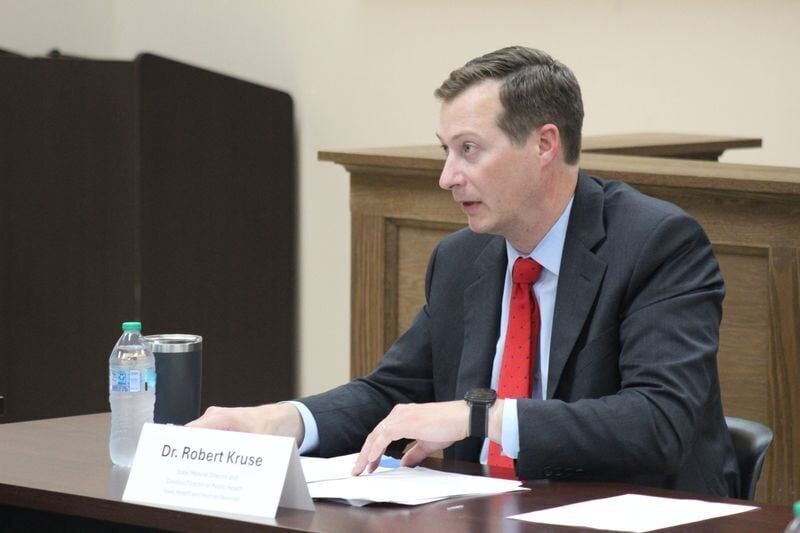
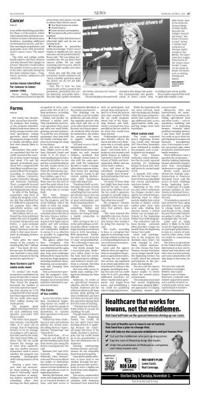
State Medical Director and Division Director of Public Health at the Iowa Department of Health and Human Services Dr. Robert Kruse speaks at a roundtable on rural cancer prevention funding at Marion County Public Health's office in Knoxville on Sept. 23, 2026.
The Combat Cancer initiative is part of Iowa's Healthy Hometowns proposal created with money from the Rural Health Transformation Program managed by the Centers for Medicare and Medicaid Services.
Iowa received $209 million from the $50 billion, five-year initiative intended to offset the cost of some of the losses hospitals will see from reductions in federal Medicaid spending over a decade under President Donald Trump’s so-called One Big Beautiful Bill act.
Noting that Iowa was the first state to receive Rural Health Transformation Program funding, Jeff Kahrs, U.S. Department of Health and Human Services regional director, said Iowa is well positioned to get more of the federal funds when the second round is awarded in December.
"You guys have started out well, I know you're going to end well. I wouldn't be surprised if you guys even end up getting more than you think you're going to get," Kahrs said. "This is a great time for everybody around the whole country, frankly, to sit back and ask what is working, what are we learning, what is changing for patients, and where do we go from here?"
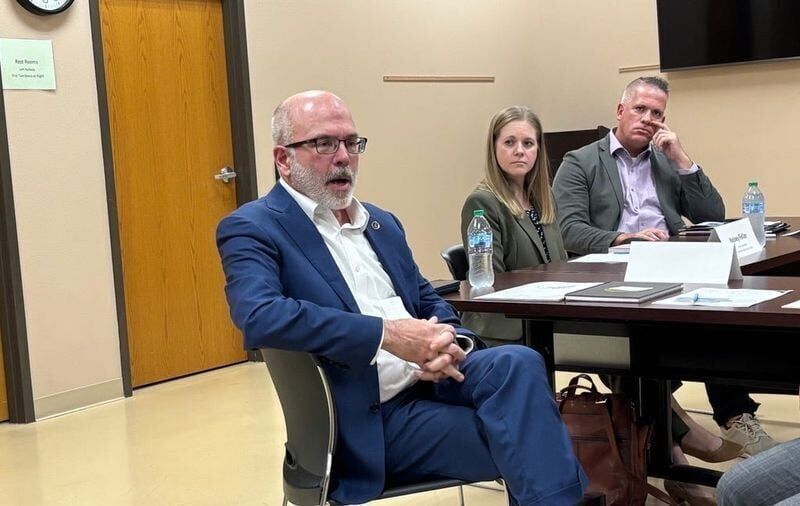
U.S. Department of Health and Human Services Regional Director Jeff Kahrs discusses funding for cancer prevention in rural Iowa during a roundtable at Marion County Public Health's office in Knoxville on Sept. 23, 2026.
Expanding radon mitigation and cancer screenings in rural Iowa
One of the key focuses of grant funding is radon mitigation, which public health officials hope will help reduce rates of lung cancer.
Radon is a colorless, tasteless and odorless gas that is found at high levels in Iowa soil. Every Iowa county is Zone 1, which is rated the highest-risk category by the U.S. Environmental Protection Agency. The gas is most commonly found in basements.
It is also a leading cause of lung cancer among non-smokers, according to the EPA.
With the funding, Marion County has ordered and distributed 9,700 radon test kits to local public health departments across the state, according to Iowa HHS.
The collaborative also launched a scholarship program for those seeking training and certification in radon mitigation to expand the workforce in rural areas and is offering financial assistance to help eligible homeowners install radon mitigation systems.
Beyond mitigation, cancer screening is also a priority across the rural counties. Early detection makes a material difference, particularly for lung, prostate, breast, skin, cervical and colorectal cancers, University of Iowa's Holden Comprehensive Cancer Center Director Dr. Mark Burkard said.
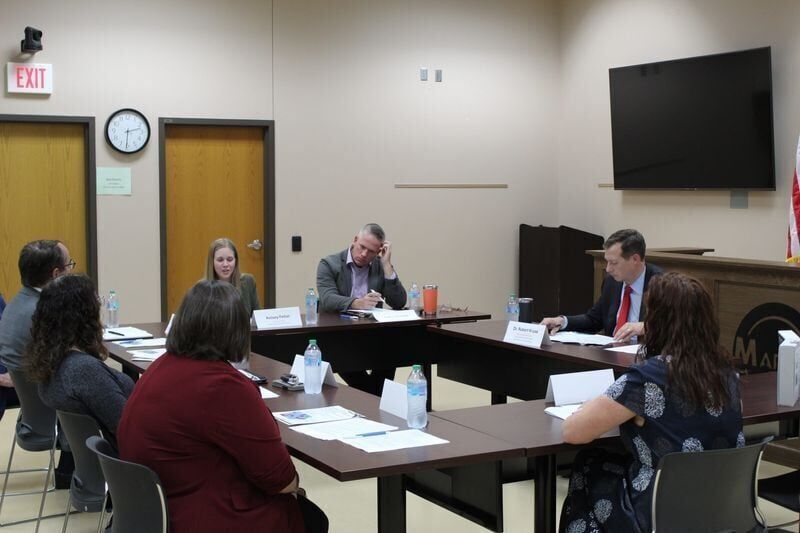
County, state and federal public health officials discuss funding for cancer prevention in rural Iowa during a roundtable at Marion County Public Health's office in Knoxville on Sept. 23, 2026.
A portion of the grant will be put towards lung cancer screening and diagnostic services, which Burkard says are lacking in Iowa. According to Burkard, only 20% of Iowans are screened for lung cancer.
"We're hoping to do more to allow patients to receive high-quality care in their community with less travel and make it more accessible to the people who have the least means to seek tertiary care at some center far away," Burkard said.
Grant money will also be used to purchase dermatoscopres, diagnostic tools used to find early signs of skin cancer. So far, 331 healthcare providers across 66 counties have requested the tool through the initiative.
Investments in telehealth for screenings and cancer treatment for rural Iowans to access are crucial for Iowans in rural areas who face geographical barriers to healthcare access, county health officials at the roundtable noted. Through the initiative, 40 telehealth tablets have been mailed to libraries, pharmacies and public health departments where Iowans in rural areas can use them for appointments.
When asked about how the initiative will be impacted by the continued closure of rural Iowa hospitals and clinics due to low Medicaid reimbursement rates, Kahrs said the one-time funding is a "huge bump" while acknowledging there's "more work to be done" in healthcare funding.
"It's going to take a lot of different efforts to make this happen," Kahrs said. "It's not going to be fixed overnight."