
HIGH SCHOOL BASEBALL
Denison scores 3 late to spoil Clarinda Baseball Day (copy)

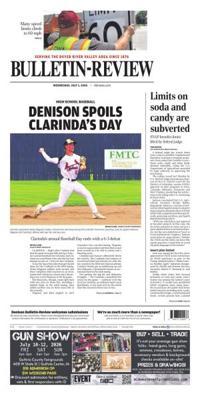
Clarinda sophomore Nolan Wagoner makes a throw from shortstop during the Cardinals' home loss Saturday, June 20, against Denison. Wagoner led Clarinda's offense with two hits and two runs.
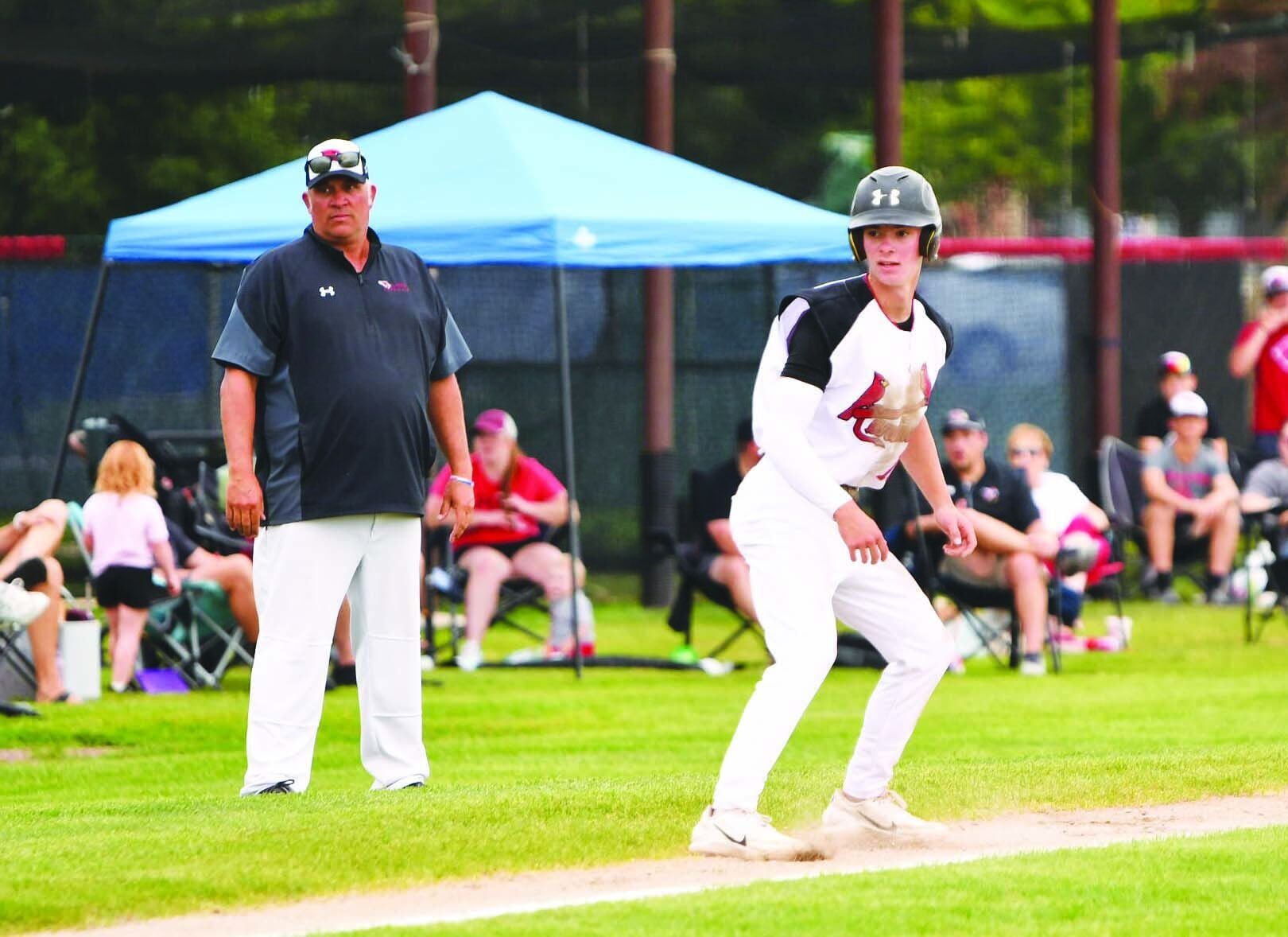
Clarinda sophomore Nolan Wagoner stands on third base next to Cardinals head coach Rod Eberly Saturday, June 20, during Clarinda's Baseball Day game against Denison.

Clarinda sophomore Dax Tomkinson stands in during a plate appearance Saturday, June 20, during a loss to Denison.
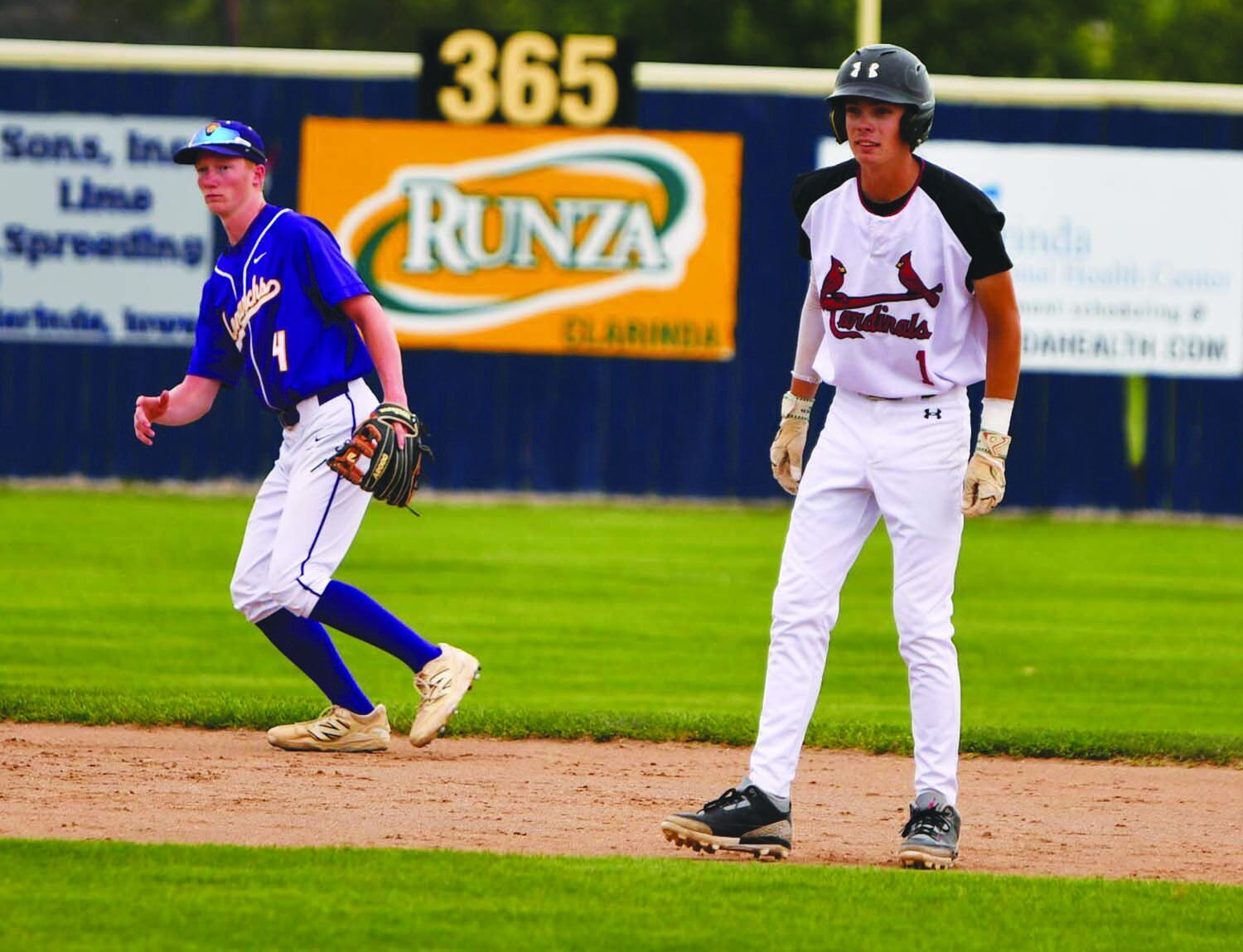
Clarinda senior Warner Schmitt leads off second base Saturday, June 20, during the Baseball Day game against Denison.

Clarinda senior Kort Neal delivers a pitch Saturday, June 20, during a home loss to Denison. Neal went the distance striking out two in the loss.

Clarinda sophomore Nolan Wagoner makes a throw from shortstop during the Cardinals' home loss Saturday, June 20, against Denison. Wagoner led Clarinda's offense with two hits and two runs.

Clarinda junior Creighton Bird races home to score one of three Clarinda runs Saturday, June 20, during a Baseball Day loss to Denison.
CLARINDA — Right after Clarinda had tied the game in home fifth during Clarinda’s annual Baseball Day Saturday, June 20, Denison scored three runs over the last two innings to earn a 6-3 win over the Cardinals.
It was the top of the order that got the job done for the Cardinals in the fifth inning. Nolan Wagoner walked, stole second, and then Creighton Bird reached on an error. Jordan Butt laid down a bunt and a throwing error scored Wagoner to tie the game.
The Monarchs, though, came right back with two runs on three hits, including a leadoff triple, in the sixth inning, then added another run on three more hits in the seventh.
Wagoner and Bird singled to start Clarinda’s two-run first inning. Wagoner scored on a groundout and then Bird scored from second on a fly ball to center and a throwing error.
Clarinda had chances offensively down the stretch. The Cardinals had runners at second and third and nobody out after the run scored in the fifth but Denison pitcher Camdyn Nemitz got an infield pop up and two strikeouts. Clarinda left runners at second and third in the sixth inning.
Not getting the big hit and defensive struggles — the Cardinals committed five errors for the game — continue to be the story for Clarinda, according to head coach Rod Eberly, as his team lost for the ninth time this season by three runs or less.
“We can’t continue to make six or seven errors every game,” Eberly. “We left runners on the bases again. We had second and third and nobody out and couldn’t score. When you’re in the Hawkeye 10 and playing good teams, that’s a recipe for disaster.”
Nolan Wagoner had two of the six hits for the Cardinals and scored two of the team’s three runs. Creighton Bird added a hit and a run, and Jordan Butt drove in a run.
Kort Neal started on the mound for Clarinda and went the distance, giving up 11 hits and six runs, three earned. He struck out two and walked one. Eberly said his senior didn’t have his best stuff, but he battled through.
“He’s on four days rest and kudos to them for hitting him,” Eberly said on Neal’s afternoon. “He kept us in the game. Three of the six runs were unearned, if we can take those away and we win the game. That’s where we are right now. Hopefully, we can find a way to get rolling a bit.”
Clarinda and Denison match up again on Monday in Denison, the start of a six-game week for the Cardinals, which includes a trip to Busch Stadium in St. Louis Sunday, June 28, against Atlantic.
“They’re excited for the trip (to Busch Stadium),” Eberly said, “but we had bigger goals than Busch Stadium when the season started. We’re finding ourselves in a funk and next week isn’t easy with Denison, Clarke, Creston and a doubleheader against Lewis Central. We’re not complaining. We just got to find a way to make some big hits and get some big outs when we need too.”
The loss dropped the Cardinals to 7-10 on the season and 6-8 in the Hawkeye 10 Conference.
Federal judge blocks Iowa SNAP restrictions on soda, candy (copy)
A federal judge has struck down Iowa's plan to prohibit Supplemental Nutrition Assistance Program recipients from using their benefits to purchase soda, candy and other foods deemed unhealthy, ruling the U.S. Department of Agriculture exceeded its legal authority in approving the restrictions.
The ruling, issued last Monday by U.S. District Judge Amy Berman Jackson of the U.S. District Court for the District of Columbia, vacates USDA's approval of pilot programs in Iowa, Colorado, Nebraska, Tennessee and West Virginia, preventing the restrictions from taking effect or continuing in those states.
Jackson concluded that U.S. Agriculture Secretary Brooke Rollins improperly relied on a section of federal law allowing pilot projects aimed at improving the administration of SNAP rather than a separate provision specifically governing nutrition and health demonstration projects.
"With her solicitation and approval of the pilot projects in this case, the Secretary purports to waive not just a mere administrative or technical obstacle, but the very definition of 'food' as it was laid down by Congress," Jackson wrote in her 68-page opinion. "Neither the USDA nor the states can force this square peg into a round hole to avoid the plain language of the statute."
Iowa's plan halted
Iowa was among the first five states approved by USDA to test restrictions on SNAP purchases as part of the Trump administration's "Make America Healthy Again" initiative championed by Health and Human Services Secretary Robert F. Kennedy Jr. and Rollins.
Unlike other states that focused primarily on soda and candy, Iowa's waiver was among the nation's most restrictive. It would have prohibited SNAP recipients from using benefits to purchase all taxable food items under Iowa law, including soda, candy, sweetened beverages, certain prepared foods, certain granola bars, caramel corn and other candy-coated snacks. The restrictions took effect Jan. 1 under a two-year pilot approved by the USDA.
The ruling does not prevent USDA or states from pursuing future nutrition-focused SNAP demonstrations. Instead, Jackson concluded Congress has already provided a pathway for such projects, but they must comply with the more rigorous legal framework established for health-related pilot programs rather than redefining what qualifies as "food" under SNAP.
Reynolds criticizes ruling
Gov. Kim Reynolds sharply criticized the decision, saying Iowa will continue pursuing efforts to improve nutrition through the food assistance program.
"For decades, the USDA's Supplemental Nutrition Assistance Program has fallen short of its original intent to provide low-income families with affordable access to nutritious food," Reynolds said in a statement.
The statement argues against taxpayer subsidizes for candy and soft drinks while 40% of American adults and 20% of American children are obese
"I'm proud that Iowa is among the states leading the type of SNAP reforms necessary to promote better nutrition, health, and well-being. The changes proposed aren't a mandate — SNAP members can choose what they want, but the state won't pay for unhealthy foods. The court's decision is shortsighted and does nothing to improve the health of our country. In the meantime, Iowa will continue to work on our plan to do exactly that."
Challenge to Trump initiative
The lawsuit was brought by SNAP recipients in the five affected states, who argued the restrictions would harm their health, finances and ability to buy medically necessary foods.
Among the plaintiffs were an Iowa man with diabetes who said juice boxes and small cans of soda are often the fastest way to treat dangerously low blood sugar, another participant with kidney disease who relies on products such as Pedialyte and Gatorade to stay hydrated, a Nebraska resident whose dietitian recommended low-sugar energy drinks because he cannot safely consume coffee or tea, and a Tennessee mother who said many of her autistic daughter's limited "safe foods" would no longer qualify for SNAP benefits.
The plaintiffs argued USDA exceeded its statutory authority by allowing states to redefine what qualifies as "food" under federal law. Federal law broadly defines eligible SNAP purchases as "any food or food product for home consumption," excluding only alcoholic beverages, tobacco and hot prepared foods.
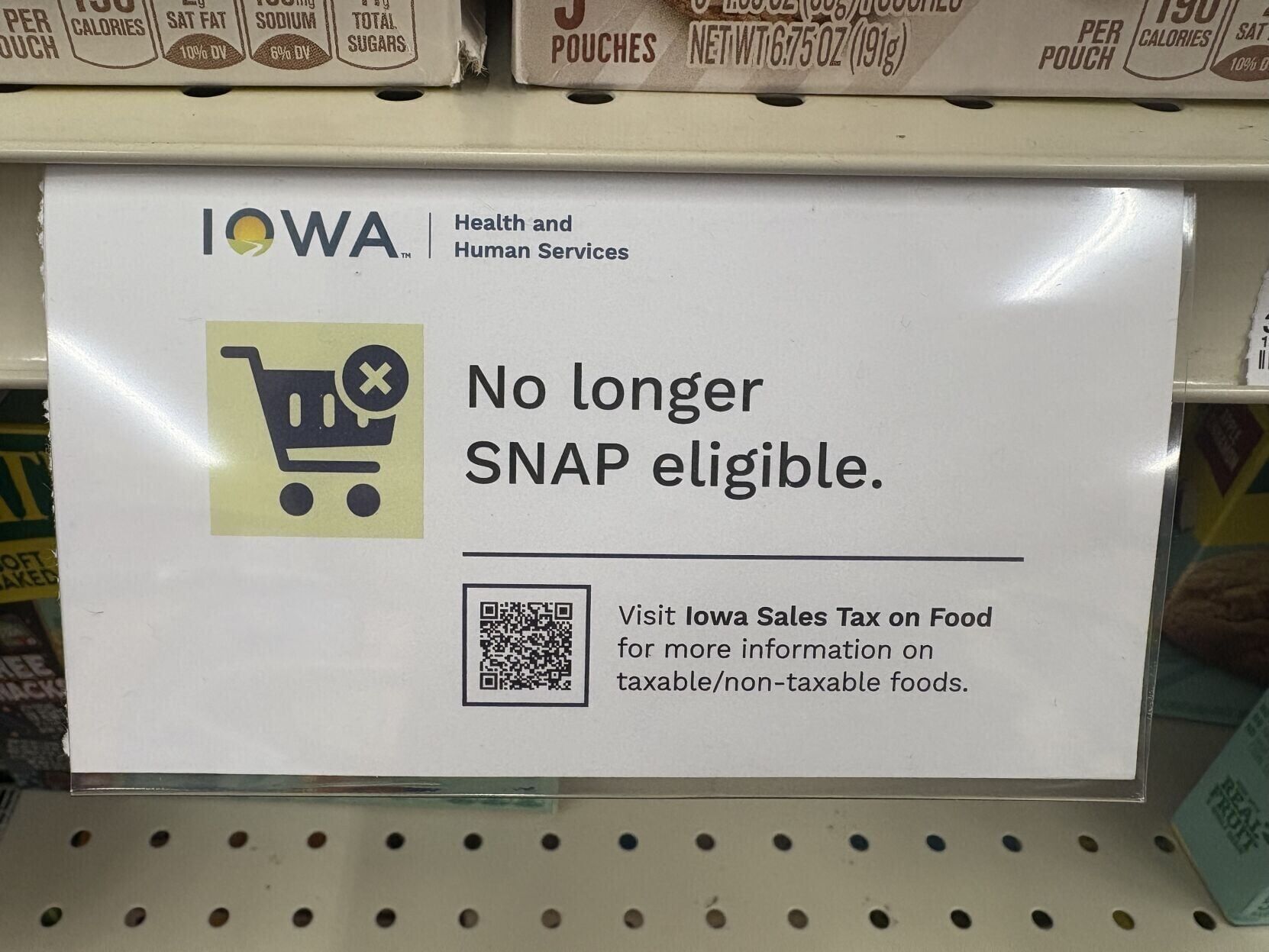
A shelf tag reading "No longer SNAP eligible" hangs beneath a box of breakfast bars at a Des Moines grocery store, informing shoppers that the product cannot be purchased using Supplemental Nutrition Assistance Program benefits under Iowa's now-blocked Healthy SNAP pilot program‚ which has now been halted.
Jackson agreed, writing that Congress — not the USDA — established that definition.
The decision represents a significant setback for one of the signature nutrition policies of the Trump administration's Make America Healthy Again agenda. Kennedy and Rollins had encouraged states to seek waivers restricting purchases of foods such as soda and candy, arguing taxpayers should not subsidize unhealthy products linked to obesity and chronic disease.
At least 23 states had applied for similar waivers, according to USDA data.
Supporters of the restrictions argued they would help reduce obesity, diabetes and other diet-related illnesses while ensuring taxpayer dollars support healthier food choices.
Critics, including anti-hunger advocates and many nutrition policy experts, countered there is little evidence purchase restrictions improve health outcomes. They argued the policies would create confusion for recipients and retailers, increase checkout delays and potentially discourage eligible families from participating in SNAP.
The National Grocers Association previously estimated implementing the restrictions nationwide would cost retailers $1.6 billion initially and nearly $760 million annually because of the technology changes needed to identify prohibited items at checkout.
The ruling vacates USDA's approvals and remands the matter to the agency, meaning the five pilot programs "may not proceed," according to the court's order.
The Food Research & Action Center, one of the groups opposing the restrictions, said the ruling reaffirms that federal agencies must stay within the authority granted by Congress and follow required legal procedures when changing SNAP policy. While the decision blocks the five-state pilot programs, the organization said it does not prevent future efforts to improve nutrition among SNAP recipients, including incentive programs such as Double Up Food Bucks. Instead, it said any future demonstrations must have clear legal authority, rigorous evaluation and safeguards to minimize unintended harm to SNAP households, retailers and state agencies.
The advocacy group urged states to carefully weigh the legal, operational and financial costs of continuing or implementing food restriction programs, citing significant retailer compliance costs and increasing administrative burdens on state SNAP agencies.