
Default speed limit to increase on many Iowa rural roads July 1 (copy)
Thousands of Iowa motorists will see higher speed limits on rural roads this summer as a new state law takes effect July 1.
Senate File 378 was passed on April 22, changing the speed limit for roads with the default speed limit from 55 mph to 60 mph. The bill was signed into law by Gov. Kim Reynolds on June 1.
The bill passed the Iowa Senate with a 28-16 vote with most Republicans in favor and Democrats in opposition.
State Sen. Tom Townsend, a Democrat from Dubuque, opposed the bill. Townsend expressed safety concerns with the legislation
“As someone that grew up in a rural community, I’m very concerned about the increased speed, especially where there’s lots of hills and corners, and, these days, many more UTVs on the road,” Townsend said.
The State Police Officers Council also registered in opposition to the bill while the national Advocates for Highway and Auto Safety asked House Republicans to forgo the bill in the interest of safety.
On the flip side, Iowa Sen. Kerry Gruenhagen, a Walcott Republican, argued in support of the bill noting vehicles have become safer since the speed limit had been lowered in 1973.
Despite the legislation change, individual jurisdictions could decide to keep a lower speed limit if they see fit.
Daniel Yeh, director of government and community relations with the Iowa Department of Transportation, said that an example of this would be areas of a road with a railroad crossing.
Under the new legislation, the default speed limit would be 60 mph. However, the county where the road is located could provide a study showing safety concerns related to speed near railroad crossings, allowing the speed limit to remain lower.
“The county would need to determine whether that's going to stay at the default speed limit, and therefore move to 60, or whether they have an engineering and safety reason to keep it at 55,” Yeh said.
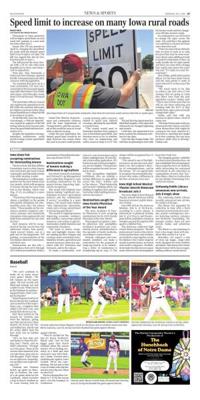
Yeh said that the department has identified roughly 1,800 signs that will need to be changed beginning next month.
Until then, the department has been creating the aluminum overlays for the signs.
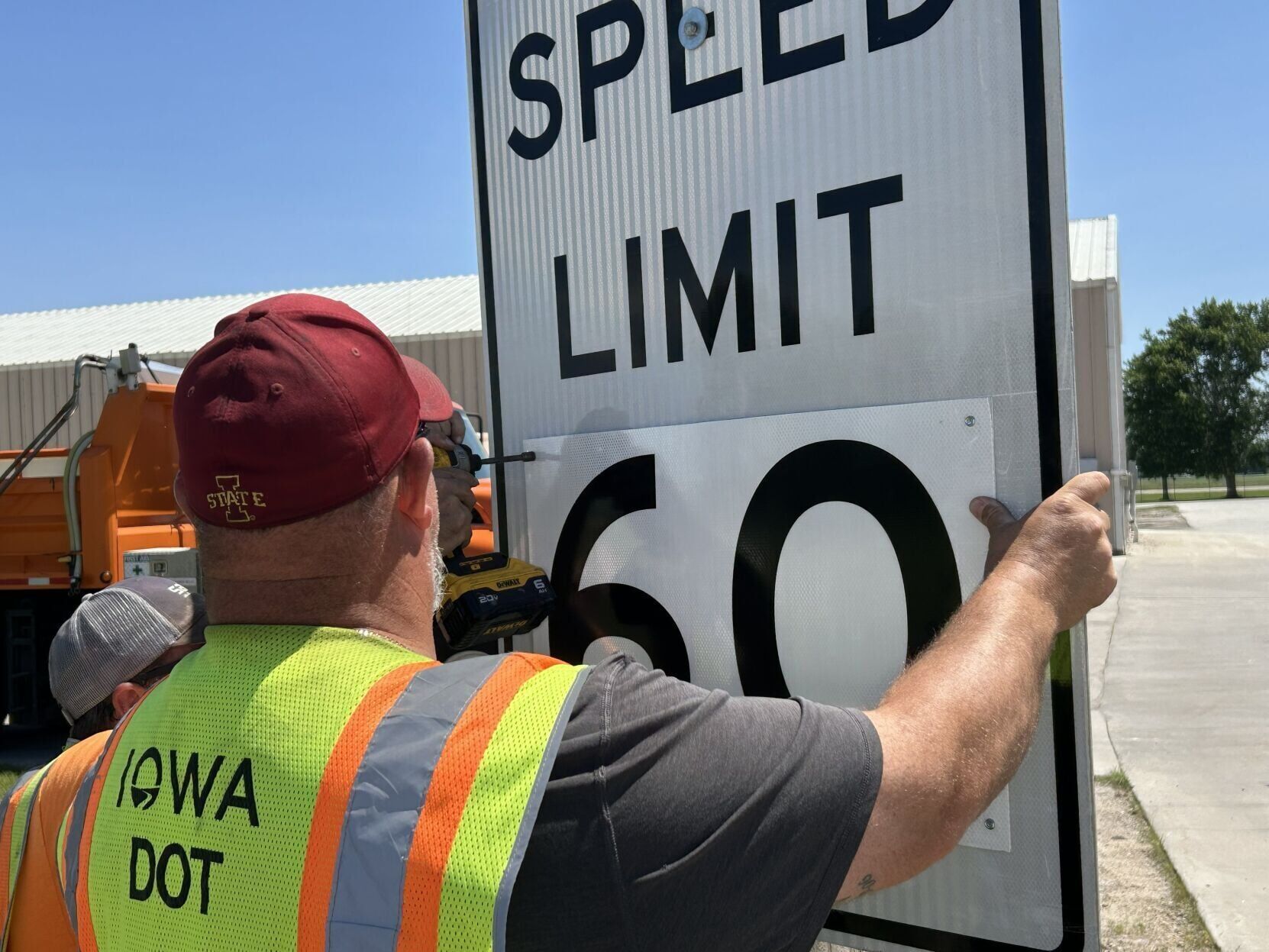
Iowa Department of Transportation employees show what the aluminum panel overlay looks like on speed signs.
Once the sign changes begin, Yeh said they are planning to start with the busiest roads and the changeover will take around a week.
It’s estimated to cost $270,000 to change the signs across the state. Yeh said this is the upfront cost and there is a chance for future costs down the road.
“There are some future elements that we have to look at as well, because there may be some roadways where some additional study is needed to determine if they can really handle the 60 mph speeds and there are some other changes that could come down the road,” Yeh said. “It’s really on a road-by-road basis.”
Alex Dinkla, public information officer for the Iowa State Patrol, said the state patrol is ready to assist Iowa DOT as they enact the change.
“We stand ready to be able to enforce any new laws or law changes that are going to come into effect here from the past legislative session,” Dinkla said. “This is one of those laws that we will be out there enforcing and working with the DOT as they modify their signs and eventually change their signs.”
Dinkla said that with any increase in speed comes a level of safety risk.
“We hope that people really pay attention further ahead, watch for those distractions that might be coming in the road, whether it's livestock or anything that might be in that roadway, but just have patience while they're driving,” Dinkla said.