
Iowa groups sue EPA over nitrate-impaired river action
Iowa environmental groups are suing the Trump administration over the U.S. Environmental Protection Agency’s July 2025 decision to remove seven Iowa waterways from the Iowa Department of Natural Resources’ impaired waters list.
The lawsuit, filed Thursday in federal court by Food & Water Watch, the Iowa Environmental Council and the Environmental Law & Policy Center, asks the court to reinstate the designations or require the EPA to issue a final explanation for reversing course.
The groups argue the EPA improperly removed portions of the Cedar, Des Moines, Iowa, Raccoon and South Skunk rivers from the impaired waters list despite nitrate and nitrite levels exceeding standards tied to drinking water protections.

Schmidt
Iowa Environmental Council General Counsel Michael Schmidt said the federal government could not legally ignore worsening nitrate contamination in drinking water sources across the state.
“Iowans in cities, towns and rural areas face worsening health problems due to nitrate contamination,” Schmidt said. “Pretending the problem doesn't exist is not a legal option.”
The EPA declined to comment, citing agency practice not to discuss pending litigation.
Under the Clean Water Act, states must submit impaired waters lists to the EPA every two years.
The EPA partially disapproved Iowa’s 2024 submission in November 2024 and added seven river segments that regulators said exceeded nitrate standards linked to drinking water protections.
EPA rejected the Iowa DNR’s “10 percent rule,” which generally requires more than 10 percent of water samples to exceed standards before a waterway is classified as impaired. Federal regulators argued that approach was inappropriate for nitrate pollution because of its toxic health effects.
The EPA cited risks, including methemoglobinemia, or “blue-baby syndrome,” a potentially fatal condition in infants that reduces the blood’s ability to carry oxygen. The agency also said Iowa failed to fully evaluate available water quality data.

Lyon
In a December 2024 letter, Iowa DNR Director Kayla Lyon objected to the EPA’s decision, arguing nitrate is not formally classified as a toxic pollutant under federal regulations and warning the agency’s interpretation would increase regulatory oversight and costs.
Lyon also defended Iowa’s drinking water protections, citing a 99.6 percent compliance rate with the federal Safe Drinking Water Act nitrate limit and noted communities that exceeded the standard later installed additional treatment systems or secured alternative water sources.
“DNR agrees that nitrate is a harmful pollutant and has created a water quality standard specific for surface drinking water sources consistent with this reality,” she wrote. “This standard and its associated monitoring and testing methodologies are based on rigorous science and are protective. And it works.”
Lyon also argued the EPA had approved Iowa’s nitrate standard and related impaired waters methodology for more than two decades without objection.
“The standard has not changed in the interim, and the EPA hasn’t had concerns with the standard until now,” Lyon wrote, adding that both agencies share the same goal of ensuring Iowa’s drinking water is safe.
“It is safe,” Lyon wrote.
Months later, under a new administration, the EPA rescinded its partial disapproval, saying Iowa DNR had provided additional information asserting the state’s nitrate standards apply only to chronic exposure rather than both chronic and acute health effects.
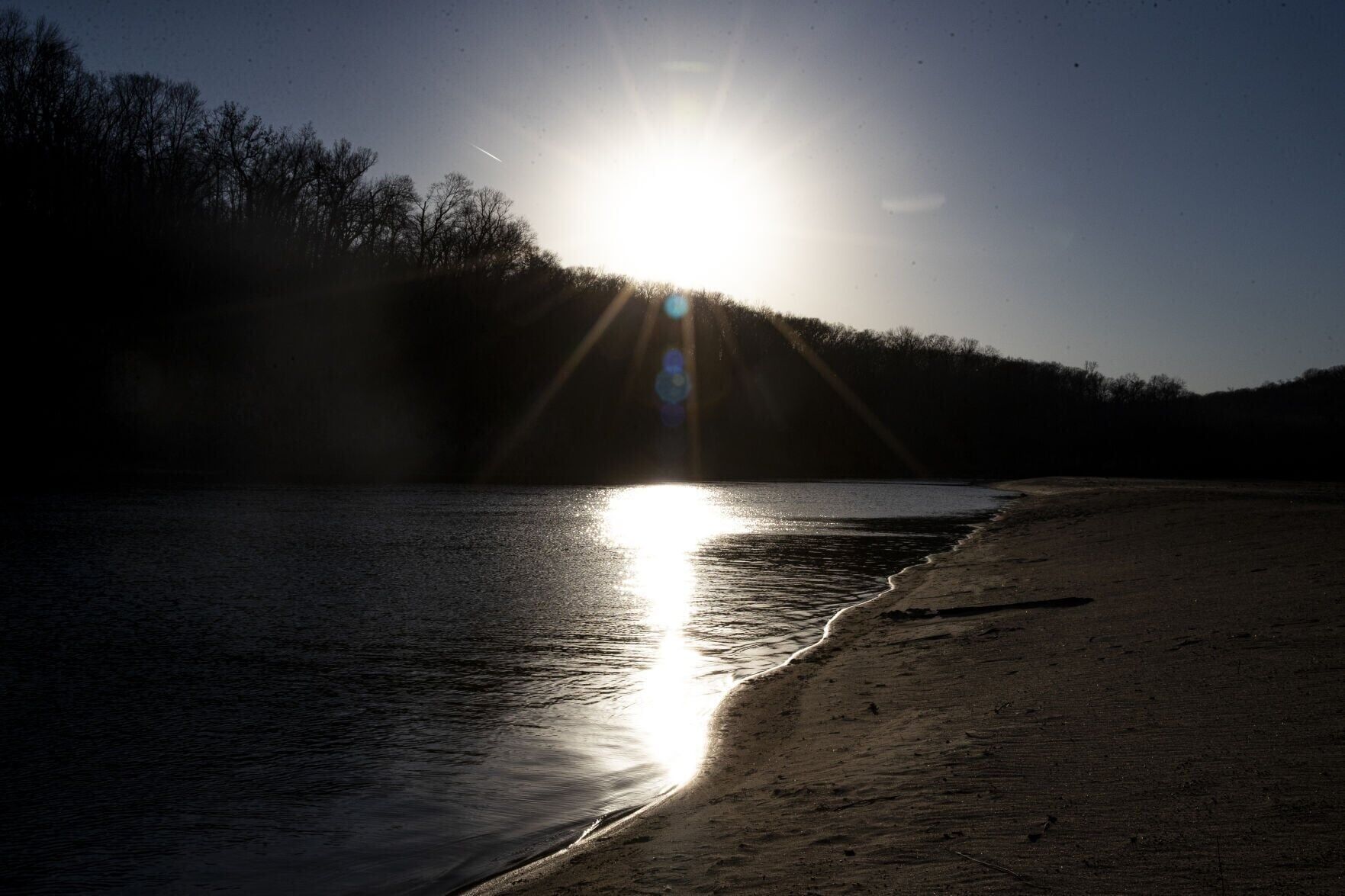
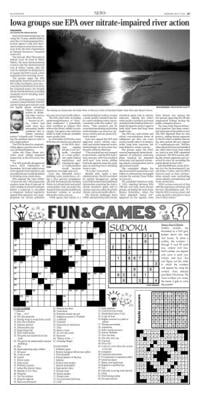
The setting sun illuminates the Cedar River in February 2024 at Palisades-Kepler State Park near Mount Vernon.
The lawsuit challenges Iowa DNR’s interpretation that nitrate standards apply only to chronic exposure, arguing the state’s water quality standards are based on federal Safe Drinking Water Act limits designed to protect against both short-term and long-term health risks.
The EPA has said nitrate and nitrite concentrations above 10 milligrams per liter can cause serious health effects in infants, while long-term exposure has been linked to certain cancers.
The groups argue the EPA’s reversal improperly halted development of pollution reduction plans required for impaired waterways and ignored worsening nitrate contamination tied to agricultural runoff.
The complaint alleges the decision lacked transparency and relied on information exchanged outside the normal Clean Water Act process.
The complaint references a July 1, 2025, meeting between EPA officials and state Farm Bureau groups, including the Iowa Farm Bureau Federation, where the “Iowa impaired waters list” appeared on the agenda. Iowa Farm Bureau was among the few groups opposing the nitrate impairment listings during the public comment process.
The Iowa Farm Bureau Federation’s position “has been consistent and is part of the public record: The EPA departed from its own process, adding stream segments to the list when available data for the time period did not support it,” a spokesperson said. “Further, when asked, EPA has not identified any other data it may have relied on, which is why IFBF submitted comments. The EPA erred in adding the stream segments and corrected its error by rescinding the partial denial of Iowa's list.”
Josh Mandelbaum, senior attorney for the Environmental Law and Policy Center, said the EPA’s reversal came as Iowa communities already were confronting severe nitrate contamination and water restrictions.
“EPA’s actions were out of step with the experience of Iowans and the law,” Mandelbaum said. “It’s time for EPA to course correct and come up with a real plan to clean Iowa’s dirty waters.”