

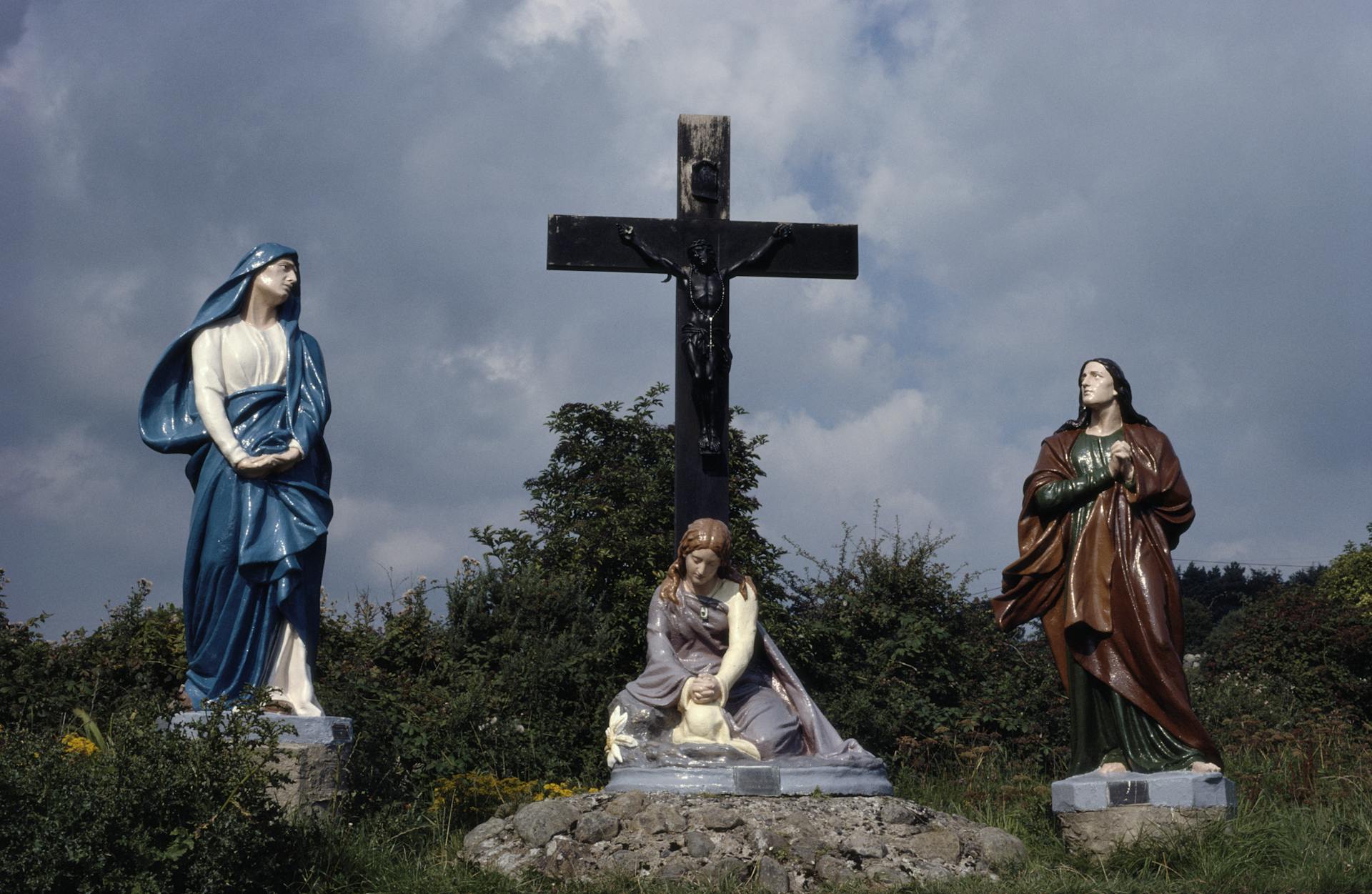
 St. Brigid of Kildare's shrine in Faughart, County Louth, Ireland. (Photo by RDImages/Epics/ Hulton Archive via Getty Images
People are also reading…

10 fun facts about St. Patrick’s Day
55 Percent of Americans plan to celebrate

The National Retail Federation estimates that more than half of all Americans will join in the festivities this St. Patrick's Day—55%, to be exact. Predictably, young people lead the charge, with 72% of 18- to 34-year-olds planning to revel on March 17. About 63% of 35- to 54-year-olds will join the party, and all but 42% of those ages 55 and older will stay home.
American’s will spend over $5.6 billion on St Patrick ’s Day

The average participant will spend about $40.
Of those celebrating, 81 percent will wear green

The most common way to celebrate St. Patrick's Day by far is to rock the green. About 81% of Americans will wear green on March 17, a number that has changed little over the last decade.
The average person will consume 4.2 drinks on St Patrick’s Day.

It turns out that the holiday's rep for booze-soaked debauchery is, in large part, earned. St. Patrick's Day is the #4 biggest drinking day of the year in America. New Year's Eve tops the list, with Christmas and July 4 coming in as close runners-up.
13 million pints of Guinness will be consumed, which is 819 percent more than usual.

If St. Patrick's Day had an official beer, it would have to be Guinness—it is, after all, the most popular beer in Ireland. In 1759, Arthur Guinness signed a 9,000-year lease on a dilapidated property at St. James Gate in Dublin, Ireland, and began brewing ale. A decade later in 1769, six-and-a-half barrels set sail for England, the first batch ever to leave the Emerald Isle. Guinness would go onto become one of the most successful beers in the world and the one most closely associated with Ireland.
30 percent of Americans plan to cook a special St Patrick’s Day meal. Cabbage shipments increase 70 percent

With the exception of potatoes, cabbage is more closely associated with Irish cuisine than just about any other food—and it seems that a head is in every American kitchen on St. Patrick's Day. Like the potato, cabbage entered the Irish diet out of necessity. Potatoes were the only crop that poor Irish farmers could grow enough of to survive under the tenant farming system, which since the 1600s had forced millions of poor Irish farmers to toil for British landowners in their own country. When the potato crop failed, the Irish turned to the only other readily available source of food at their disposal—cabbage.
1962: First year Chicago River was dyed green

It is not Boston, but Chicago that lays claim to what is one of the most grandiose and famous St. Patrick's Day traditions in the world. Every year since 1962, the city has dyed the Chicago River bright green in honor of the Emerald Isle's most celebrated saint.
1732: Year of America's first St. Patrick's Day celebration

On March 17, 1732, Irishmen celebrated St. Patrick's Day on American soil for the first time in history. That soil, fittingly, was in Boston. The day was marked by the first St. Patrick's Day Parade, as well, but that parade was not officially sanctioned.
67: Years St. Patrick's Day was dry in Ireland

Fairly or otherwise, St. Patrick's Day is synonymous with Guinness, shots, and overflowing bars—in America, that is. From 1903 to 1970 in Ireland, however, no one had a sip on St. Patrick's Day that they didn't have to sneak. Drinking was banned, and pubs were ordered closed by the Irish government, which declared March 17 a religious holiday.


