

WASHINGTON — The federal FAFSA form used to apply for college financial aid opened to high school seniors nationwide on Thursday, a year after a disastrous rollout by the Biden administration delayed the application for months.
People are also reading…
- Former Cyclone Addy Brown commits to reigning NCAA Champs
- Daughter of 10-year MLB vet, Brianna Johnson a 'gem' who delivers for Hawkeyes again and again
- 8 children killed at home in Louisiana domestic violence, police say
- Pope Leo signals shift away from Catholic Church's focus on sex
- A timeline of assassination attempts and threats against Trump
- Watch: New Iowa running backs coach explains why he rejoined Hawkeyes
- They’re in remission, but their medical bills aren’t: Cancer survivors navigate soaring costs
- Inside Ukraine's drive to defeat the dreaded Shahed drone
- Illinois football coach Bielema making connections both past and present
- Trump administration rejects women picked for soybean board, appoints men instead
- Basketball transfer portal’s early losers: Big names, big swings, bigger questions
- Winners (Jermod McCoy) and losers (Diego Pavia) of 2026 NFL Draft Day 3
- America barely uses OPEC oil. Why are gas prices so high?
- Bringing a smartphone to a bank robbery? 4th Amendment issue hits Supreme Court
- New TrumpIRA plan aims to reach workers without 401(k)s

- ANNIE MA Associated Press
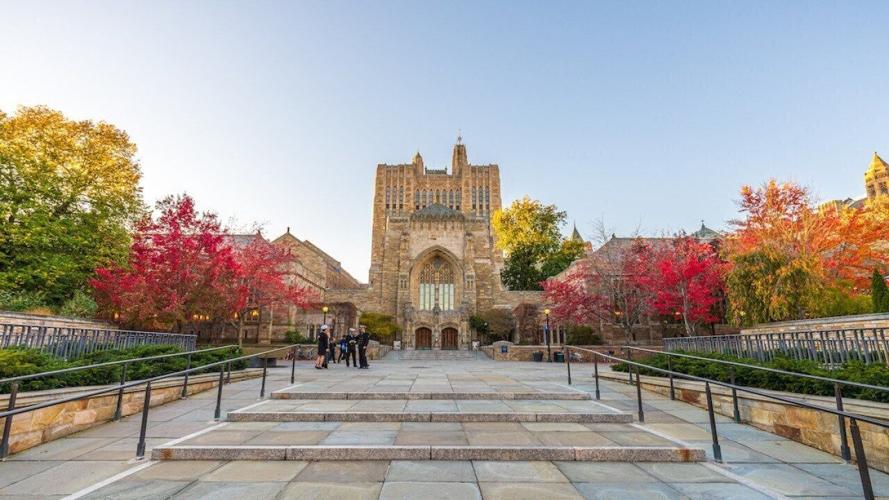
The 2024-2025 school year saw a growing number of students at campuses nationwide. Undergraduate enrollment was up by 3.2% in the spring of 2025, according to the National Student Clearinghouse Research Center. That increase is all the more noteworthy when you consider the current price tag for a college education—per the Education Data Initiative, the average cost of one year at a higher education institution clocks in at more than $38,000 in 2022-23. Still, college offers a valuable return on investment for many prospective students. An analysis from the Federal Reserve Bank of New York found that in recent years, college grads earned a median of $80,000 per year, while workers with only a high school diploma earned a median of $47,000 per year.
With this in mind, the return on investment may be more apparent at some schools than others. Stacker compiled a list of the best colleges in America using Niche's 2026 rankings. All four-year schools in Niche's database were considered. Niche ranks colleges using various factors, including academics, admissions, finances, and student life. You can check out the full methodology here.
- Winston Tan // Shutterstock
Best colleges in America

Best colleges in America
The 2024-2025 school year saw a growing number of students at campuses nationwide. Undergraduate enrollment was up by 3.2% in the spring of 2025, according to the National Student Clearinghouse Research Center. That increase is all the more noteworthy when you consider the current price tag for a college education—per the Education Data Initiative, the average cost of one year at a higher education institution clocks in at more than $38,000 in 2022-23. Still, college offers a valuable return on investment for many prospective students. An analysis from the Federal Reserve Bank of New York found that in recent years, college grads earned a median of $80,000 per year, while workers with only a high school diploma earned a median of $47,000 per year.
With this in mind, the return on investment may be more apparent at some schools than others. Stacker compiled a list of the best colleges in America using Niche's 2026 rankings. All four-year schools in Niche's database were considered. Niche ranks colleges using various factors, including academics, admissions, finances, and student life. You can check out the full methodology here.
- Winston Tan // Shutterstock


