The Mars we know may now appear at first glance to be a barren, dusty landscape. But evidence is abundant to suggest that Earth's planetary neighbor was once a vibrant world with flowing water, active volcanoes and even simple lifeforms.
NASA’s Curiosity rover has captured unusual polygon-shaped terrain on Mars, revealing a honeycomb-like pattern that scientists believe may be linked to ancient wet-and-dry cycles. The features were observed at ground level in Gale Crater and measure about 4 to 8 centimeters across. Researchers suggest similar mud cracks may have formed during the Noachian-Hesperian transition, roughly 3.8 to 3.6 billion years ago, when Mars may have had a more Earth-like climate. Scientists are analyzing the polygons’ shapes and chemistry for clues about Mars’ ancient environment and the role of water. Disclosure:This video contains stock footage and content created or enhanced using Ai-assisted tools ai-generated WooGlobe Ref : WGA297650
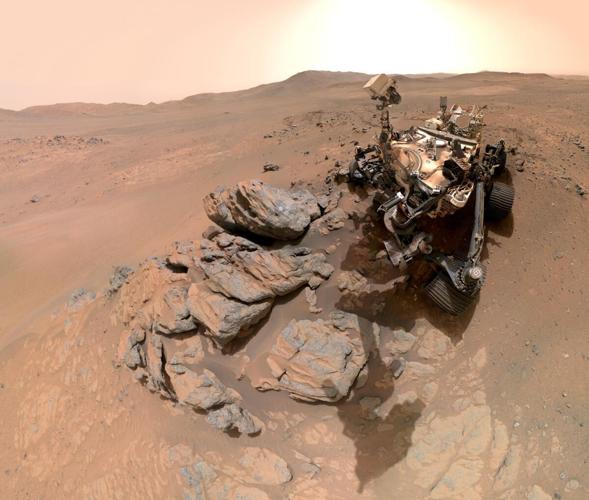
NASA’s Perseverance Mars rover took this selfie on March 11 during the rover’s deepest push west beyond Jezero Crater. The photo was assembled from 61 individual images
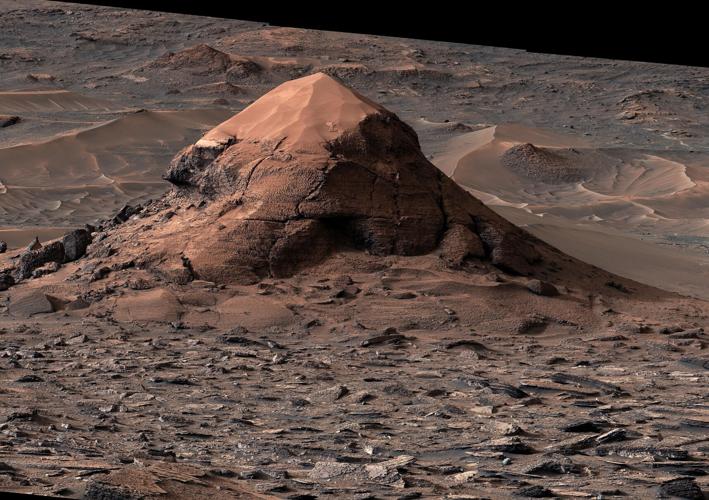
NASA’s Curiosity Mars rover captured this sand-capped butte, nicknamed “Miraflores,” estimated to be about 20 feet tall, on June 11. The butte was left behind as surrounding rock eroded away over time, deepening the broad valley Curiosity is climbing through.
NASA’s Perseverance Mars rover took this selfie on March 11 during the rover’s deepest push west beyond Jezero Crater. The photo was assembled from 61 individual images
NASA’s Curiosity Mars rover captured this sand-capped butte, nicknamed “Miraflores,” estimated to be about 20 feet tall, on June 11. The butte was left behind as surrounding rock eroded away over time, deepening the broad valley Curiosity is climbing through.