As the nation prepares to mark the 250th anniversary of the Declaration of Independence in 2026, communities across the country are reflecting on the events, people and places that shaped their corner of the American story. In the Quad-Cities, that story stretches from the era of Native nations and frontier forts to industrial innovation, wartime production, devastating floods and economic transformation.
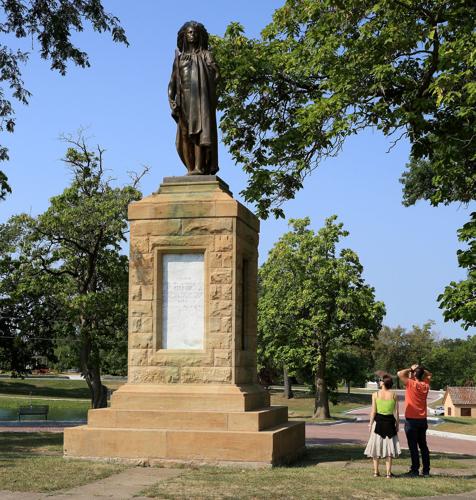
Chief Keokuk was a member of the Sauk tribe in the Middle Mississippi River Valley and was noted for his policy of cooperation with the U.S. government during the Black Hawk War of 1832. In 1883 the remains of Keokuk were removed from Kansas and reinterred in the newly created Rand Park in Keokuk, Iowa. The park is located on the bluff overlooking the Mississippi with a panoramic view of the river. The statue on the Chief Keokuk gravesite was dedicated in 1913, replacing the previous stone top of the monument. The statue was created by noted Iowa sculptor Nellie Walker.
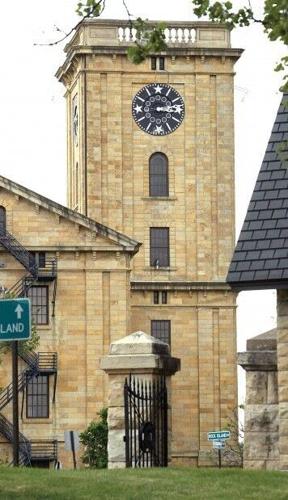
The historic Clock Tower Building on Arsenal Island is in need of repair, and the U.S. Army Corps of Engineers is looking for volunteers to help with the work. Wednesday, May 16, 2007. (Photo by Kevin E. Schmidt/Quad-City Times)
Chief Keokuk was a member of the Sauk tribe in the Middle Mississippi River Valley and was noted for his policy of cooperation with the U.S. government during the Black Hawk War of 1832. In 1883 the remains of Keokuk were removed from Kansas and reinterred in the newly created Rand Park in Keokuk, Iowa. The park is located on the bluff overlooking the Mississippi with a panoramic view of the river. The statue on the Chief Keokuk gravesite was dedicated in 1913, replacing the previous stone top of the monument. The statue was created by noted Iowa sculptor Nellie Walker.
The historic Clock Tower Building on Arsenal Island is in need of repair, and the U.S. Army Corps of Engineers is looking for volunteers to help with the work. Wednesday, May 16, 2007. (Photo by Kevin E. Schmidt/Quad-City Times)