

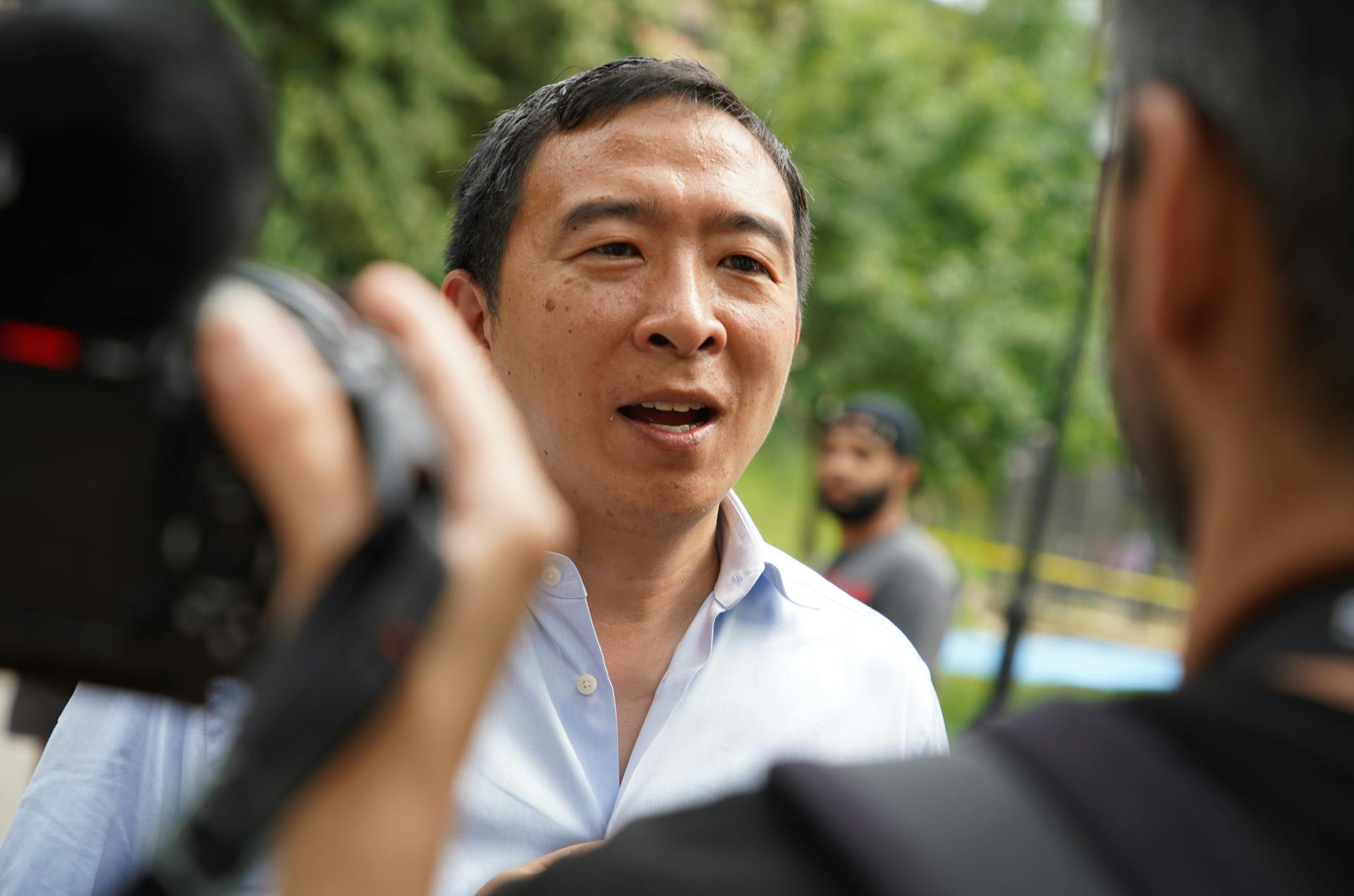
 Andrew Yang, losing candidate for president and New York City mayor, is one of the founders of the Forward Party. Rob Kim/Getty Images
People are also reading…
The 10 Senate seats most likely to flip in November
1. Pennsylvania

Mehmet Oz (R) vs. John Fetterman (D)
Incumbent: Republican Pat Toomey (retiring)
The start of the general election in the Keystone State was a mixed bag for Democrats trying to flip the seat of retiring GOP Sen. Pat Toomey. Their nominee, Lt. Gov. John Fetterman, was sidelined by a stroke just before he won the primary and has been off the trail recuperating. But then they got the Republican opponent they wanted in celebrity surgeon Mehmet Oz.
The Donald Trump-backed candidate narrowly won the GOP nomination after a recount, but not without his image taking a serious hit -- weeks of attack ads from Republican rival Dave McCormick and his allies had driven up Oz's negatives. (In a Fox survey ahead of the primary, for example, 46% of GOP voters had an unfavorable view of Oz.) The race is expected to tighten as some of those Republican voters get behind Oz now that he's the party nominee.
But Democrats' message is picking up where the primary left off. Fetterman's TV spots, which lean into an "us vs. Washington" theme that never mentions the candidate's party ID, repeat that he's "from Pennsylvania, for Pennsylvania" -- an implicit knock on Oz, who has said he moved from New Jersey in late 2020. Republicans are equally happy to be running against Fetterman, a former Bernie Sanders supporter who handily defeated his more moderate primary challenger. But in a state that Biden carried and with the GOP primary forcing Oz to the right, this seat is still the most likely to flip in the fall.
2. Nevada

Sen. Catherine Cortez Masto (D) vs. Adam Laxalt (R)
Incumbent: Democrat Catherine Cortez Masto
Nevada moves up one spot, trading places with Georgia, where the fundamentals of the state (for example, past presidential performance) would seem to give Republicans a better chance of unseating a Democratic incumbent. But the Republican Senate nominee in the Silver State, former state Attorney General Adam Laxalt, is a more tested candidate than the GOP nominee in Georgia, ex-NFL star Herschel Walker.
That may not be saying much considering Walker, a political neophyte, is widely seen as the biggest wild-card candidate of the cycle and Laxalt lost his last bid for statewide office (the 2018 gubernatorial race). Laxalt, however, has held statewide office before and is the grandson of the former governor and senator with the same last name. Georgia Sen. Raphael Warnock, who was on the ballot just last year, also started the cycle as a better defined (and funded) Democratic incumbent than Nevada Sen. Catherine Cortez Masto, who hasn't faced voters in this transient state in six years. Masto has a tough road ahead, to be sure -- and fissures in the state Democratic Party aren't helping -- but the Supreme Court ruling on abortion could work in Democrats' favor in a state where even the most recent GOP governor supported abortion rights.
Laxalt sought to downplay the political impact of the court's decision last month, saying in a statement that abortion rights were "settled law" in the state. But that likely won't stop Democrats from pointing to his praise for the decision and arguing that he'd be another Republican vote in the Senate should Congress attempt to pass an abortion ban.
3. Georgia

Sen. Raphael Warnock (D) vs. Herschel Walker (R)
Incumbent: Democrat Raphael Warnock
Even Democrats are somewhat skeptical about a recent Quinnipiac University poll that showed Warnock, who's running for a full six-year term after winning a special election last year, ahead of GOP challenger Walker by 10 points among registered voters. But even if that margin was too big to be true -- there aren't yet many other public surveys for comparison -- it was notably wider than Georgia's gubernatorial matchup, suggesting there's something specific to this race, rather than the poll itself, going on here.
The margin was also a departure from Warnock's and Walker's neck-and-neck standing in Quinnipiac's January poll, which could reflect recent troublesome headlines for Walker, who received negative ratings for honesty in the June survey. His campaign recently acknowledged, for example, that he has three children by women he was not married to, in addition to his son by his former wife. That's opened him up to charges of hypocrisy given his public criticism of absentee fathers, especially in Black families. (Walker just went up with his first ad of the general election, and the positive spot -- a hybrid ad paid for by the National Republican Senatorial Committee -- doesn't offer more than bland platitudes about him wanting to serve Georgia.)
What's most encouraging for Democrats facing a tough national environment may be that Warnock is still viewed more positively than Biden. The senator's job approval rating was at 49% in the Quinnipiac poll, compared with 33% for the President. That's some impressive separation the first-term senator has been able to create from the White House in a state not predisposed to vote Democratic. The poll was mostly conducted after the Supreme Court's abortion decision on June 24, so Warnock's advantage over Walker may also reflect some of the immediate backlash to that ruling, which won't necessarily be sustained through the fall.
The good news for Republicans? A plurality of Georgians said inflation was the most urgent issue facing the state, which means the GOP still has four months to double down on messages like this one, from One Nation, accusing Warnock of voting for "reckless spending" that, the ad contends, has led to higher costs for Georgians.
7. North Carolina

Rep. Ted Budd (R) vs. Cheri Beasley (D)
Incumbent: Republican Richard Burr (retiring)
Republican Rep. Ted Budd enters the general election with a built-in advantage in the race to succeed retiring GOP Sen. Richard Burr given that Trump twice carried the state. And while the conservative congressman's fundraising hasn't impressed, outside GOP groups are carrying the weight on TV, attacking Democratic nominee Cheri Beasley's judicial record. Local TV stations took down one of those ads, but the soft-on-crime attack line is a central message Republicans are deploying against the first Black woman elected as chief justice to the state Supreme Court.
Beasley has responded by touting her law enforcement support, including with a spot that features sheriffs and police captains. "Cheri's always had our backs, and we know she always will," Richmond County Sheriff Mark Gulledge says. Another recent Beasley ad tries to distance the candidate from Democratic control of Washington, as she says, "Neither political party is getting it right" while promising to hold Washington accountable.
Democrats, meanwhile, are trying to portray Budd, who was boosted by the campaign arm of the Club for Growth in the primary, as too extreme for the state. Senate Majority PAC, a major Democratic super PAC, invested in this race after initially leaving it off its early reservations -- a sign that Democrats haven't counted this one out even if it's less of a priority than other GOP-held seats in Pennsylvania and Wisconsin.
10. Colorado

Sen. Michael Bennet (D) vs. Joe O'Dea (R)
Incumbent: Democrat Michael Bennet
Colorado steals the 10th spot on this list from Missouri. What's going on in the Centennial State? Democratic Sen. Michael Bennet is running for a third full term against businessman Joe O'Dea, whose emergence from last month's GOP primary makes this race competitive. (Democrats had spent millions trying to help his primary opponent win because they thought he'd be a weaker general election candidate.)
As a Republican who supports abortion rights in the early stages of pregnancy, O'Dea brings a unique profile to the race. Colorado has trended blue in recent federal elections -- Biden won it by more than 13 points in 2020, the same year GOP Sen. Cory Gardner was unseated by 9 points. But Bennet's previous elections have been close. In 2016, for example, he prevailed by only about 6 points against an underwhelming opponent whom the national GOP had abandoned. Against a more formidable Republican challenger in a tough year for Democrats, Bennet could be vulnerable.
In Missouri, meanwhile, the Republican field is still unsettled ahead of the August 2 primary. Looming over the party is the possibility of disgraced former Gov. Eric Greitens winning the nomination, which is the only way this seat would be competitive for Democrats.
The entrance of independent candidate John Wood could potentially complicate the race. Wood, a former senior investigator for the House January 6 committee, describes himself as a "lifelong Republican" and has said he would back McConnell for Senate leader, if elected. But if Greitens is the GOP nominee, Wood's candidacy could end up splitting the anti-Greitens vote in the general election, making it more likely the controversial Republican keeps this seat in party hands. We'll revisit Missouri's spot on the list after the crucial GOP primary.
The analysis: Some glimmers of optimism for Democrats
With more than half of this year's competitive Senate matchups set, the overall electoral environment remains consistent: President Joe Biden's poor approval numbers, combined with a pervasive sense that the country is headed in the wrong direction, are weighing down Democrats looking to maintain control of Congress.


