A partnership between Starlink, the space satellite internet company from Elon Musk, and National 4-H Council is bringing broadband connectivity to rural communities, including several in Iowa.
Alexa Groff, the 4-H STEM education specialist with Iowa State University Extension and Outreach, said reliable internet access in rural Iowa will help 4-H students participate in robotics programming and other science and technology focused activities that students in other parts of the state may already have access to.
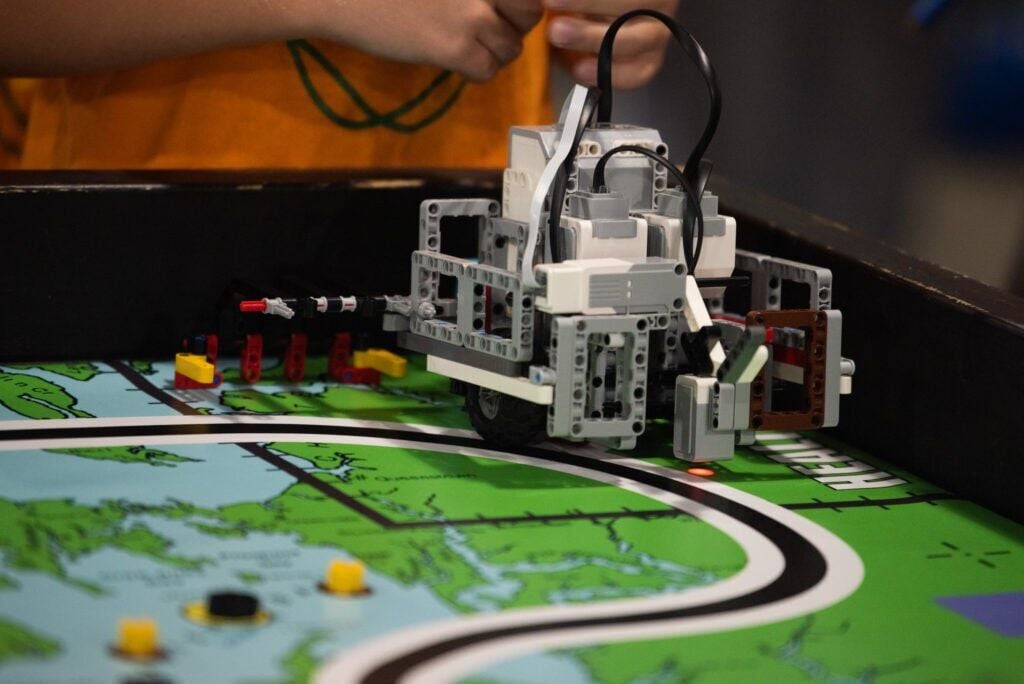
Groff said while people typically associate 4-H with showing animals at the county fair, “that’s just one arm of 4-H.” Groff said there are lots of students interested in robotics programs, which currently exist in Iowa for young 4-H students, but not for middle or high school age students.
People are also reading…
Groff said when she heard about the Starlink program, which has funding from Tractor Supply Company and partners with land-grant universities to advance STEM in rural areas, she immediately thought of robotics programs for older kids.
“You have to have connectivity to run your robotics program,” Groff said. “And a lot of the things we were hearing were: ‘We have the space, we have the volunteers, but we just don’t have the right resources,’ the connectivity being the biggest part.”
A lot of the current 4-H robotics clubs in Iowa operate at places like the county fairgrounds and community buildings that lack reliable internet connection, Groff said.
“The Starlink systems are going to allow existing clubs to fully participate in robotics activities and remove that barrier, but it’s also opening up the opportunity for other places in Iowa that maybe have that connectivity issue to maybe start up some robotics clubs,” Groff said.
Unlike other types of broadband internet that require a wired connection to existing broadband buildout, Starlink, which is engineered by Musk’s SpaceX initiative, uses low-earth orbiting satellites to beam high-speed internet to a receiving user dish. Groff said it sounds “out of this world,” no pun intended, but that the technology reduces delays and increases download speeds.
In total, the company provided 100 Starlink kits, and Iowa received 10 kits, which Groff said will be placed in 4-H communities that have an identified broadband gap. The other kits will go to programs with other participating land grant universities: American Samoa Community College, Florida A&M University, Oregon State University, University of Arizona, University of Tennessee, University of Georgia, Tuskegee University in Alabama, Virginia State University and Virginia Tech.
According to data from the Federal Trade Commission, Iowa has a number of communities where less than 20% of the area has high-speed broadband coverage. Groff said it’s not uncommon for 4-H students in rural communities to have to go to the public library to have internet speeds fast enough to take a video conference call.
Groff said in addition to some coding and direct technology skills, robotics programs teach students critical thinking and problem-solving skills that will be relevant in a variety of future careers. She said as generative artificial intelligence grows in popularity, she has also been “very real” with students about the changing technology, the need for AI ethics and an understanding of how to use the technology as a tool.
“We need to safeguard this, we need to put out more regulations around it,” Groff said. “If we can get kids to understand that you can’t be all in, if that makes sense, you have to use your skills to … become a productive citizen and make the right decisions.”
In addition facilitating robotics programing, Groff said internet access will also help 4-H chapters and members make use of the organization’s Clover platform, which has hundreds of interactive lessons available online. She said she hears frequently that students want to make use of the platform more but that they don’t have access at their homes.
“Through 4-H, we work with families and young people and communities across the state, and we see every day how much opportunity depends on access, and so we want to level that playing field for everyone,” Groff said. “Being able to bring reliable connectivity to youth means that they’re able to explore STEM or education and workforce experiences on the same footing as their peers, who might live in Des Moines.”